Episode brief
The conversation
Juan Meisel joins Nabil Malouli to unpack the operating challenge behind direct-to-consumer perishable goods. Drawing on his experience building logistics at ButcherBox, Juan explains why getting a product from a warehouse to a doorstep is not a back-office concern: it determines whether a brand earns a repeat purchase.
The conversation follows Grip's approach to temperature-sensitive fulfillment, pairing a data-driven shipping engine with physical operations. Juan shares how the team thinks about carrier selection, service quality, customer-led growth, AI adoption, and the long-term goal of making perishable e-commerce a more seamless experience for brands and consumers.
“The best funding for a company is customer revenue.”
— Juan Meisel
Edited show notes
Inside the episode
The delivery is the product experience
Juan traces the founding insight behind Grip to the gap between online demand and the operational systems needed to deliver temperature-sensitive products reliably. For a direct-to-consumer brand, the final delivery can shape whether a customer returns.
Technology needs an operating system
Grip began with a software product that evaluates factors such as weather, carrier performance, inventory location, and destination. The company then added fulfillment operations to put those decisions into practice under the same roof.
Customer revenue as a discipline
Juan describes customer revenue and service quality as the foundation for sustainable growth. The team treats referrals as an outcome of doing the work well and stays deliberate about onboarding capacity.
AI as a way to accelerate learning
The discussion explores how Grip uses AI to help teams work with operational data and share practical examples across the company, rather than treating adoption as a top-down mandate.
Key topics
Key takeaways
What stays with you
- 01
Perishable e-commerce succeeds or fails at the intersection of product quality, delivery reliability, and cost.
- 02
A shipping decision can be more effective when it responds to the specific order, route, weather, inventory position, and carrier performance.
- 03
For complex physical operations, technology has greater leverage when the operating model can act on its recommendations.
- 04
Customer trust and referrals are built through consistent service and rapid correction when the operation falls short.
- 05
AI adoption is more practical when teams can see concrete examples of how peers use it to improve their work.
About the guest
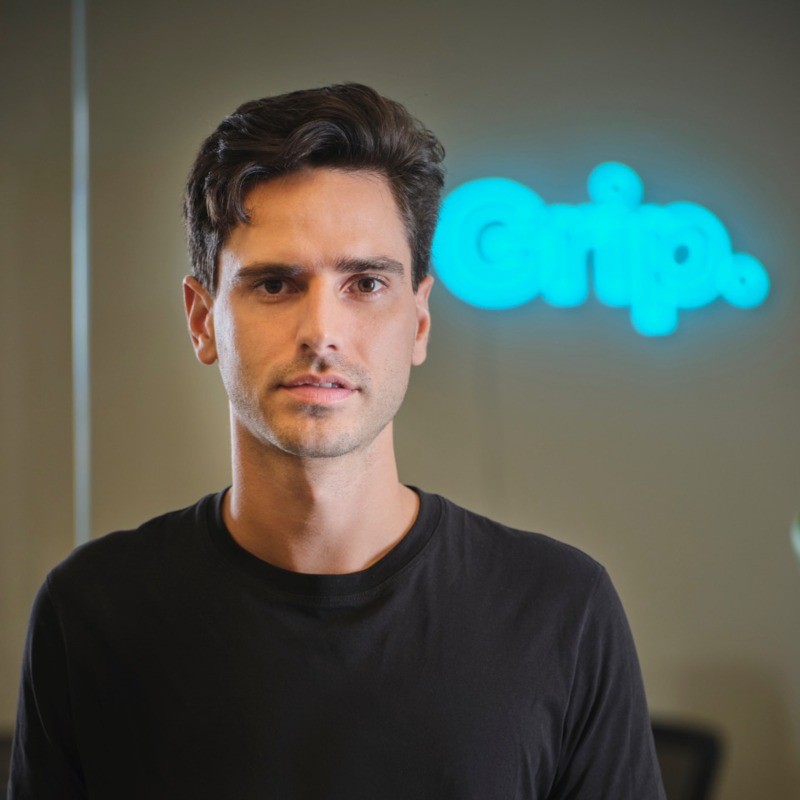
Juan Meisel
CEO & Founder · GripJuan Camilo Meisel is the founder and CEO of Grip, a technology-driven fulfillment and logistics company built for direct-to-consumer companies selling temperature-sensitive products. Before founding Grip in 2022, Juan spent six years leading logistics at ButcherBox, where he helped the company grow from launch to approximately $600 million in annual revenue. At Grip, he combines fulfillment operations, real-time data, and predictive technology to help brands determine the best carrier, packaging, refrigerant, and shipping strategy for each order. Juan grew up around his family's century-old distribution and logistics business in Colombia.
“We're building towards solving something.”
— Juan Meisel
Full conversation
Transcript
The transcript has been lightly edited for readability while preserving the speakers’ meaning.
Read the full transcript
who you are. And with Grip, what do you guys do?
At Grip, we're building the future of supply chain for products that are perishable, meaning frozen, refrigerated, temperature sensitive.
How much do you do? Like do you do both? You do um perishable food and also medical and life science products. You you already that also?
Yes, both of them.
How how important is the technology in that?
It's the core of it.
Mhm.
It's not just like how important, it's like literally the core of the product. you took the path of like yeah we will be best in technology but we will also build infrastructure and we will own that and we will manage that. Why is that?
It's the only way to create a step change of improvement when you're building something like what we are and addressing a problem as complex as the one that we are. Welcome everybody to the fourth episode of the supply chain technology podcast. I'm Nabil and I'm your host. I'm so happy to have Juan Masel today, the CEO and co-founder of Grape. Juan, good to see you.
Good to see you.
How are you doing?
Good. Thank you for having me here.
Yes. Amazing. Amazing. So, um, let's get started. Juan, tell us a bit about like who you are and uh, with Grip, what do you guys do?
Yeah, totally. So at Grip, we're building the future of supply chain for products that are perishable, meaning frozen, refrigerated, temperature sensitive. So we're building the most sophisticated technology and supply chain ecosystem for all those beautiful CPG brands out there and pharma products that need to be delivered to homes across the country. So we have the best coverage in the industry, 80% of the US population we can reach within 24 hours and the rest in just 48. So that's you know unheard of in the industry and we're doing that with the best technology out there. So very dynamic, very sophisticated and building the future of this industry.
That's great. That's not a very common uh area to attack for entrepreneurs. So like tell us about like your personal story where you come from and why did you decide to attack this this problem?
Yeah, totally. So uh born and raised in Colombia, South America. There, you know, my family has 105 years old history of running uh supply chain and and logistics and operations company.
Which city in Colombia?
So we're from we're from Barankia is a north coast but you know presence of the company hot yes hotter than Miami but the presence of the company is all across all across the country also you know South America, Latin America and some in Florida as well. But I you know I grew up in the world. I grew up, you know, literally moving boxes myself, just, you know, going my summers and working at the warehouses and just learning from, you know, the dad and the family doing that. So,
that's great.
You know, that that's that's my upcoming. And then, uh, when I I moved to Boston for school after Colombia and there I joined the very very early team of a company called Butcher Box that, you know, a lot of people know now.
But, you know, I joined
That's still around, right?
Yes. Totally, totally. I'm doing very well. Um, but you know, I joined very early on essentially when we were trying to sell the first box of meat online to the point to where, you know, even the logistics problems were not even problems for us yet. Our first problems were, hey, how do we, you know, sell meat online? How do we get people to trust us to buy meat online? But, you know,
when was that? Like what year?
2015, 2016. Uh, so 10 years ago. A little bit over 10 years ago.
Yeah. I mean, at that time, penetration of grocery was super low.
Super low. You know, it's it's u if if shipping or selling perishable goods online was a boss, we were driving that bus.
Yeah.
And we were like we were on the driving seat of that bus. We were trying to get consumers to adopt it. Nowadays, if you ask people around you or yourself, everybody has
bought a box of perishable products delivered to the house or if not their neighbor, their friends or they know about it at least. So, you know, consumer behavior has changed.
Yeah. Yeah. That's that's that's great. And so so you were at Butcher Box um early in the in the business, right? And so you saw the problem there obviously you you talked about like adoption of consumers, but then there's the logistic part. So tell us like so what happened there? You you see you see the problem or you see the company start to scale and then you you realize that the logistic itself is not is not well served like
that's where the fun starts.
Okay. Okay. Good. Good. Let's go.
You know at at first it was a marketing problem, right? like consumer adoption and and and getting the brand out there and and you know being online that's that's the marketing problem. And then within the first six, seven months of the company, we solved the marketing problem because we you know we hit the ground running and we started to get subscribers even more than we ever thought we were going to get. we got in the first year
and the problem very quickly shifted from how do we sell a box to how do we deliver a box
and and that became the focus at that time and that's what I started running at the time because
it was something you know never done at scale before that way we we needed to do it
so that's why we had to essentially build all these things from from scratch and figure out you know how to how to fix the balls while we were running it essentially at the same time but that's where the fun started you know that's that's where the excitement of just you know looking at the numbers and building the right KPIs and you know understanding the supply chain building it from the ground up like that that's where the fun started and that's where I myself just found essentially building that you know from scratch with with the company and the great team that we were able to to put together
that's great and is is that then the basis of grip that uh starting to work on that problem and then you decided to basically leave the business and then go and open grip and and start that that uh you know like a standalone business around that.
Correct. Yeah. So I mean we saw that hey you know this is a problem that at that time we were already running butcher box at half a billion dollars of revenue. So very very significant scale
and and we still had the problem.
You know we still had people running Excel spreadsheets here and there and we had a guy who we used to call the weatherman who was looking at the temperatures you know of where the boxes were being shipped from. And and and the reason for that is because there was not a solution out there that we could plug into. And at the same time, you know, like brands are not logistics companies at its core. It's marketing technology companies and product development companies, but it's not logistics companies at its core. Like they shouldn't be.
Yeah.
Right. Because there's there's people that dedicate their lives and efforts and companies to just solving those problems. uh because we tried to find some you know suppliers and vendors that could help us there and we couldn't and then at the same time when consumer adoption changed and there were a lot more brands popping up in the space with amazing products that were having the same issues were reaching out to us and saying hey butcher box hey Juan you know I I get I buy butcher boxes like you guys have to have seemed to solve this problem somehow because they get delivered to my door frozen and you know they didn't know that in the back end we were doing a lot of things manually as well. But we at least had, you know, a method to do it.
Yeah.
And and when they started asking those questions, then then I just realized that like, hey, you know, we have this problem. These brands have these problems. This is a very new industry as a whole. So there hadn't been a chance for someone to drop off from the first class of successful D2C companies in the in the perishable world. Yeah.
To solve the problem.
Yeah. because it's such a complicated and and and so many details go to the problem that you can't just think about a think about the problem out of the blue and go build a solution. You have to leave it you know through your tears through the blow. You have to leave the problem to then just understand it and go build a solution. So
you know when I connected that dots my thought was say if I don't if I don't solve this for the industry no one will right now
maybe in a few years but nobody else will solve it right now the way that it needs to be solved.
Yeah. And that's when when it was just so clear to me that hey this is not just a butcherbox problem. This is an industrywide problem and I want to see the industry succeed.
Yeah. And absolutely it makes a lot of sense right because you have companies that have built call chain network for B2B traditional B2B for years or decades. Correct.
But then there was zero direct to consumer perishable business. Right. I mean it's like 10 years old maybe. Yeah. What you saying like box was definitely one of the first ones. Um, I remember actually I went to a free PL warehouse really close to here actually in in Dural in Miami. Um, and they were selling cookies and they had like a literally they had like a regular fridge where they would they would leave the cookies in, right?
The things that I've seen, you know, in the industry people trying to solve the problem,
right? Like crazy, right? I mean, and then you have like the the traditional um ice packs and like all kind of things. Also here in Miami, if you go to um to the FedEx center, for example, in the stone crab season, you see how much stone crabs go into like like regular packages, but they obviously they have ice packs and they have but it's like it's really like a to some level is a band-aid into into a problem that is really not well solved, right? So
I mean it's a new problem like the solutions were just not there like you know how but in fairness, how could you expect the solutions to be there if the problem was not there, right? Because consumer adoption is new. Uh but but that for me was just like so clear that hey it's a massive problem. It's an industry that is up and to the right. So we're just going to fix this. You know we're going to we're going to dive head in and we're going to go straight to the problem and we know some of the solutions. The other ones we're going to figure out as we scale. But the the opportunity for the industry to you know just adopt these type of solutions and and keep growing is at the inflection point of the industry as well because it could also inhibit the growth of the industry right because if you don't have the right solutions for these companies to plug into then they're going to spend way too much efforts and resources trying to solve the problem internally. Yeah. and they're going to divert those resources from product development, marketing, branding, technology that allows them to get faster and better to the to the consumer with a better product.
Yeah.
So, it's that inflection point where either you create solutions or the industry dies or, you know, doesn't grow as fast because the moment that a consumer buys a box of $200 worth of meat or, you know, bread or some other product and it gets delivered to them damaged or thawed or bloody, like guess what? They're not going to go back and buy another box from this company, right?
Yeah. So, so that then you know this company already spent marketing dollars to acquire the customer. This company already spent the dollars acquiring the inventory to send to the customer and then the customer has a bad experience. Yeah.
They're not going to buy from the company again.
Yeah. I love I love this. I I love this because I think you're thinking about it as almost like, hey, I'm I'm going to be the enabler that actually create the industry. And I don't think many people think that way, right? Because a lot of time if you go and you speak to investors or you speak to to potential you know uh people that want to invest or be part of they're like hey what's the addressable market but the addressable market of that you know 10 years ago was zero zero
right but of course you create the right technology and then then the addressable market of how much meat is consumed is like if can convert a certain percentage of that totally that happened that happened it's a good story because that happened with Shopify as well when they were trying to raise capital in the early days
they were asked the same question, hey, what's the addressable market? And the reality is that it was tiny because people to put a website online and start selling things online, you know, it would take months and years of development and engineers and resources. And that's why there were not that many small and mediumsized businesses with websites and selling online because there was not a solution like Shopify. So Shopify was the enabler of that industry as an example.
Yeah. Yeah. It's it's uh I think this point is a really really interesting point particularly now we'll talk a bit about AI later in the conversation but I think as you think about like technology as as actually an enabler to really create a full category or expand a full a full uh a full um industry into a direction or the other. I think it's really interesting and we saw it also with um I mean I experienced it personally also with crossber e-commerce where a lot of software have focused on that and to your point is like if you're going to buy something that cost $100 but then you need a logistic that cost another hundred then you do it one time. Yeah, you do it one time or maybe it gets really um it just stays where it is at a very very niche level and so what's the what's the what's the potential do you think what's the potential of um you know direct to consumer perishable do you think we get to you know what would it be today and what do you think that can be
huge huge I mean we can't even wrap our heads around just the total size of the potential opportunity uh you know especially in a country like this Because the way we see it is that there's so many awesome products that people need across the country that they might not have locally that the only way to get it to them is through a very sophisticated direct to consumer, you know, supply chain technology where you bring the cost down, you bring quality up, and then all of a sudden you enable all these products to be nationwide.
And and that's why, as you were saying before, it's it's a market creator, it's a it's a category enablement. uh play that that we see, you know, we're delivering so many cool products that you wouldn't even think, you know, that you could get delivered, you know, uh years ago. And and that's what excites me. It's just like, you know, when when we sit at our offices and we start looking at the metrics and and the boxes that we're shipping and then also you go to one of our warehouses and you see all these cool products going into boxes at the end of the day is is they're going to households and people that are sitting at home and they're eating dinner or creating products or creating, you know, meals at home or inviting people at home and serving them the things that we are delivering them.
Yeah. And that's, you know, when I see that, I get emotional about it because it's it's, you know, it's what gets families and people together.
So when people experience that and and and you know, they buy products from all these amazing brands, it's it's just up and to the right for the category.
Of course. Yeah. And I really I really I really also like the way you think about this because I always felt supply chain as a as an industry really have the ability to change the the life of people you know in the sense of what you just said is like you know we take things for granted you know that you can get access to anything you want and so on but it's not the case you know there's a lot of things and and and still we live in the US where in the US you have easy relatively easy access to pretty much anything but in many places that's not the case and there's still a lot of things that that might be really well distributed in one zone of the country but not in the other one. And so so that's great.
Look at the example of the you know the the human grade pet food category which is also super new and and you see how many pets live a better healthier happier life which then end up also making humans better, happier, healthier because you know they they their pets leave you know longer happier lives. Mhm.
And and this is all products that need to be frozen or refrigerated and that they're just not distributed through regular retail channels across the country.
So the only way to do that right now is through e-commerce and direct to consumer products.
But if if getting it to the consumer is too expensive or the service is not there, meaning that the consumer is not having a good experience purchasing it, then it's going to be harder for these people to buy these products. Of course. So that specifically is a category that you know objectively has made essentially you know households happier and and better because they have access to these products.
That's right. Is that the most um surprising to you or like tell us a story like an anecdote of like what's what's the crazy what's the craziest product?
I mean it's definitely an interesting one for us. Um, right because it's not necessarily what people think about right away when they think about what we do or or the products or perishable products
but you know I think it's uh started almost as a byproduct of the industry but now you see all these amazing brands you know for dogs and cats that that you know they just they're just growing and they need this product to be able to service their customer better.
Yeah. Yeah. No, that that's really that's yeah that's that's really cool. Definitely I was not thinking about this. I was thinking about like in perishable you know or or life science. So how much do you do like do you do both? You do um perishable food and also medical and life science products. You you do already that also.
Yes, both of them. Both of them. And and in the life science uh a lot also with the technology and the logistics specifically more than the the fulfillment. Um but it's also a category that you know for example if you look at at GOP1s and and you know peptides and all the other different categories that are growing a lot what's happening in that in that market and
can you tell us a bit more about like what is this like so that just for the audience maybe they they understand
yeah totally so I mean the GOP ones of course a lot of you know weight loss um programs that are are growing you know it's relatively new it's drugs that have been used for for other causes and they're now are now essentially being um you know repurposed for for weight loss and it's
it has had you know in some instances if they're abused not necessarily a great impact for society or for humans but there's a lot now more like there's there's a lot more control on it now and there's companies that are doing a great job and making sure that people that are actually using it also keep up with their proteins and with their macronutrients that they need uh you know to be able to to use GOP once appropriately but it's a product that is temperature sensitive So it's a very similar to you know putting a box of high-end rebies at you know someone's doorsteps
is the same case of you know putting GOP on someone's doorstep and the industry is also going through an inflection point where if you don't make it accessible and priced well enough so that people can get it at their houses then there's going to be a lot of waste overall because you're going to get product damage and you're going to get you're gonna essentially do an overkill of a logistic solutions where that prevents companies from from scaling as well. Yeah. Yeah. Really, really interesting. Um because yeah, that's a category that is booming too, right? So, uh weight loss products are are very popular right now in the US. So, you see a friend of yours that lost uh you know 20 pounds or 30 pounds in couple of weeks. You're like, "You get some help or
Yeah. I was I was having dinner with a friend in uh in in Brazil in in Rio uh a couple months ago and and you know we had this beautiful pic in front of us and I see this guy know you know I'm good I'm not hungry like what's you know what's wrong with like you are you fine what's wrong with you uh but you know at the end of the day like it's it's it's it's a good push you know the one of the worst problems that someone can have healthwise is obesity right and it's a big problem in this country and I think it it needs to be
addressed the right way you know it can't be abused as well because that then creates other problems as well. Yeah.
But as long as you create, you know, a good sustainable solution with the right guidance, the right help for for people, I think it's just a net positive for society.
Yeah. I mean, it's like everything, right? Like you no matter what, you have to be you have to be mindful of
trying to balance. Um so um how how important is the technology in that? Right? Because obviously we talked about, you know, you know, some of the companies shipping products into, you know, just regular boxes and just assume, you know, they'll get there in 48 hours and and uh gel packs are enough or or or some some of these alternatives are good enough. But how important is the technology and what does the technology do exactly? Tell us a bit more about that.
In in terms of the specific question of how important, it's the core of it. Mhm.
It's not just like how important it's like literally the core of the product.
So we as a company we started for the first year purely as a SAS company with the technology product.
Okay.
And and that was that was ideal that was on purpose that was you know strategy driven because when we were getting started we said hey you know building physical infrastructure takes a lot of time and capital. So what can we do right now so that we build a product that our customers can use super fast to you know make incremental improvements on what they're doing now and the answer to that was the technology the core of the company of how we built it and what we did is we created this thing that we call a shipping engine that dynamically selects what the best way to ship a perishable box is so that you can increase performance reduce cost.
So examples of what it does is it looks at temperatures through the journey. It looks at major weather events. It looks at carrier on-time delivery performance. It looks at where's the inventory, where's the final customer, you know, what's happening along the route, what's the success rate of delivering a box. So, it looks at all these different variables and questions and then makes a decision of, hey, this is exactly how you should be shipping this box to increase probability of success and reduce cost. And that's something that a lot of our initial customers could implement, you know, sometimes crappy ways within their current providers of fulfillment. But what we then saw, which was also part of the theory of how we build a company, is hey, this can be an incremental improvement. But if we actually want to do a step change of how our customers and our and our partners operate, we also need to operate the warehouses and the facilities. And we need to make sure that we have both under the same roof.
Yeah. because you know it was happening that our technology would say XYZ but then the fulfillment operation the fulfillment operations on the ground were not set up for that right so you have there essentially a shock between uh the technology and the physical world that the only way to fix it is a very tight integration between both which means that they need to be under the same roof but in terms of technology back to your question you know is it's the core of the company and the core of how we build and and still remains the core of of the company and how we do things internally And so you you um you uh started with SAS and then went really to integrate the business um you know ver vertically managing the operation. So we're just chatting about this just before um give us like a sense of like so many I see so many entrepreneurs that are like hey we don't want to touch the physical world we just want to stay in in uh in the software part and I feel like today especially when you look at some of the business models like Amazon and so on there's really like um There are businesses where by building the physical the physical infrastructure too you have a huge mode that your defensibility is is really increased significantly and consequently your value and so on. So I think it's a mix right like it's not for all businesses but but I think you took the path of like yeah we will be best in technology but we will also build infrastructure and we will own that and we will manage that. Why is that? It's it's the only way to create a step change of improvement when you're building something like what we are and addressing a problem as complex as the one that we are
and and you know companies like Amazon have done it also incredibly well for another category but they've done it incredibly well and you know at the end of the day like it's it's the harder way to solve a problem for sure
like you know you're now dealing with physical assets you're dealing with people you're dealing It's like thousands of moving variables every single day, but it's the only way to go deep on the problem and to actually solve it from the, you know, from from the root cause up. And and that's a decision that that we made. And I don't think that everybody at the company was was necessarily happy with the decision to start with, but I couldn't have been more convinced that it was a way to just keep pushing the industry and the company forward and doing right by our customers in terms of adding more value to them. Yeah. So today you have the software that manage the entire business. Um you have warehouses that are run and operated under your own technology. Do you also do the last mile or you outsource that to to partners?
So in terms of facilities right now we have uh five. We have uh the east coast, Florida, Texas, Michigan and Nevada.
Okay.
And we were just talking about these earlier but that's what allows us to get to 80% of the US population within 24 hours. And then for the last mile is something that we also actively manage but with partners.
Yeah.
So you know you come from the last mile carrier world as as well. And what we do and what the technology does is essentially is it uses the carriers for where they deliver the best at the best pricing as well. So we use the different networks for what they were designed for. You know there's some carriers that are very strong in specific areas in Cos of the country. So that's where we use them. And there there's some carriers that are you know better for some other services and some other areas of the country. So that's what we use them for. And at the end of the day something that we manage extremely closely internally you know we have a full logistics team and and full you know suite of technology that we develop internally that dynamically is deciding who's the best carrier to deliver this one box and the important part is having a dynamic enough operation and technology that it gives you the option to decide you know looking at the options of hey I have zip code one two three four five I can get there with these five carriers who's performing the best and at what price.
Yeah that's great. We're gonna have um I told you earlier we're gonna have Itama also from VHO
uh coming in later today. So
it's a great example. I mean
do you work with them?
We are in the process of of on boarding them as partner. Okay. You know great
they good or not. So I tell him
no they are. I mean that's what we've seen and that's what we heard they are. Um and but it's what we were saying before like you know there's specific regions of the country where they operate very well. Yeah.
There's other regions of the country that they don't even cover.
Yeah. Absolutely. And there's other regions of the country where they're probably very new and trying to figure out how to do it and they will eventually will.
Yeah.
But but I don't think the solution is essentially say, "Hey, I'm going to give every single box to VHO to every single zip code that they cover."
Right.
100% agree.
Because even if you ask them like, "Hey, there's probably products that like shouldn't be sent with them to a specific zip code because they're having issues on that zip code." And it's normal like that's how operations and real world logistics work. But it's about having the technology and being flexible enough on the ground and running your your own operations so that you can make decisions like that. Yeah. And that's I think what makes or breaks margins and experiences for the brands that we work with.
That's great. No, that's great and I'm fully with you and I think we saw particularly and I would love to have your view also around COVID. Covid had changed a couple of things and I think one of the thing that had changed at the time in the US market is really many companies had this dual poly model where was primary FedEx and UPS maybe some USPS into the mix but then the networks were really like really packed and and there was there was so much demand that I think it some companies were pushed to use other partners even if they didn't necessarily thought about that but also many companies were created the last 10 years regional players that are now also covering very well some areas of the countries with very strong service next day or even same day and I think I think uh itama will probably be part of that of that and is part of that wave. How do you do you how do you think about this? Like how do you think about uh today you have the big guys, you have you have DHL e-commerce, you have a USPS, uh FedEx, um UPS and Amazon shipping probably are the five big ones and then you have many of the regional players of the tech enable um yeah the likes of VHO and and uh LSO and some some traditional some more maybe a bit more tech oriented. Um what's the mix? Do you do you say hey I don't really care. I'm going to work with the one that has the best service, best price, and I'm going to use 50 of them if I have to. Or you still try to minimize and say, "Yeah, I don't really want to have to deal with that many carrier either." So, I really have to try to
uh rationalize a but still I'm going to go with if I have to go with 10 or 15 or 20, I'm going I'm going to do that.
So, our
because I think your strategy is really interesting because it's it is a strategy that of course we're talking here in the in the context of grip, but it is a problem that many companies are trying to figure out. So
our job and what we get paid for is to add that complexity and solve for that complexity
because because a brand if a brand wants to manage 10 15 different carriers
like that takes so many resources and and so much complexity internally to do that themselves that then they're of course discouraged to do so. But then that means that they can only use one or two of the national players and then you know a couple of the regional ones and then they've they fall back in terms of the improvements and and you know the advantages that they can get from that and and most of the time they're not even using two of the national players. They're using one because they don't have enough volume you know to to optimize the operations with their partners in terms of pickups and and volumes to get good pricing on that as well. So our job is to add the complexity and work work with as many as we can as long as we can improve service first and then reduce cost as as a secondhand measure. But
but yes, that's our job, you know, adding adding as many carriers as we can to the mix that we know that are going to be end up being a net positive for our partners and customers.
And um who are the best carriers right now? I know it depends by zone, but if you had to say, hey, I think these three companies do a really good job without maybe going too deep into you know which area use them but like which one do you think I like today u strong operationally and and uh maybe leaving the commercial aspect aside.
Yeah. I mean we um like even if you think about FedEx and and UPS which you know they they of course you know just get a lot of [ __ ] in the industry in terms of of people thinking that they don't perform well like even if you think about those two companies you know it's incredible operations like what they have built over the last 50 years it's it's incredible
but the problem is that what we were saying before that hey there's specific areas of the country where they will have trouble and it's normal like it happens in operations But you know, how do you combine them both so that it's the best for your company and your service? So like, you know, those two are two amazing companies, right? But what happens is that if a shipper doesn't have the technology and and the right process to say, "Hey, this is exactly where I'm going to use one of these companies and this is where I'm not going to use them and and they're not dynamic enough to change that, then that's where they have issues." But, you know, those two are great companies. Then, you know, same with companies like uh you know, Lasership OnTrack. Um then you have, you know, UDS. So as you were saying then you have a lot more regional companies you know like the I don't know better trucks of the world which you know are much smaller coverage but also doing good job in certain regions of the country. You have VHO which you know it is going to be here in some time and you know like that I can keep naming you know five 10 more that we do a lot of work with as well. Okay but they're very you know very niche very regional and and they're all very you know very good at what they do.
That's great. Yeah. No thank you for this. I know these are like questions that sometime but yeah I think it's important right like just to share you know the one we feel that are doing you won't say anybody that does a bad job
I'm joking you're free to respond not
I mean but but I I'll tell you what even the ones that you think or you hear are doing a bad job there's zip codes and regions of the country where they're the best
you just have to know you just have to like analyze the data you need to have the right technology you need to have the right team to change fast enough to use them where they do perform best because if not they weren't, you know, they wouldn't be in business.
Yeah. Yeah. And and maybe it's um it's also an interesting point, right? Like because I'm sure people will listen to this and be like, "Yeah, I had this bad experience with this company or or this." And and I think it's it's absolutely fair to say also like, "Hey, look,
you know, if you're going to manage that scale of operation, that scale of business, and you think you're going to be the best everywhere, that's that's very unlikely, right? I mean that's also the reason why there are many companies
that have been able to to specialize in also different level of service and different level of coverage and so on. And so I think it's it's uh it's probably ultimately the the the right statement to say hey look just just look at weight makes sense for you
depending on the business where you operate the lanes the service level the complexity a delivery times you need and then these companies even the ones that are usually considered or a lot of people like to [ __ ] about actually they they they do a pretty good job also.
I agree. Yeah. I mean, it's it's it's like if someone come to us to, you know, wanting us to ship, I don't know, auto parts out of our fulfillment facilities, like, hey, you know, we're not set up for that. Like, why would you use us for that right now? Now, I promise that I'll figure it out if someone wants us to do that, you know, and it's a good opportunity, but it's not what we're focused on right now and it's not what we're going to deliver a good service on right now.
Yeah.
So, it's a very similar concept. You know, you just need the right process, technology, and understanding to know what to use the different partners for.
Yeah, absolutely. That sounds great. Um, tell us a bit about like the company, right? Like so you founded the company in 2022.
Yes.
So uh really right into that COVID past COVID depending on where you live you might have still been in COVID certainly in Florida in 2022.
I was in Boston at the time.
Okay. Well, Boston might have been still a bit like on the back of that, but uh COVID in Florida didn't really exist a so in 2020 and of 2020 was already kind of like u something that was behind a but the uh the company open at the time officially and tell us a bit like the journey from there from 2022 to now. Um maybe how COVID also impacted adoption. Um it's it's complicated to talk about this as a as a positive um you know as a positive element to business but it is factually true that it has enabled certain business to just accelerate around adoption for consumers and it has changed a couple of things. Many things have come back to to the way was before. Most of them came back to to ultimately the way we were doing business before. But it was an accelerant for e-commerce. Um and certain categories particularly food and perishable groceries and so on really took off during that time because there was there was a lot of people that were not comfortable to just go to the stores, right? So, so how did that impact you or also change your testis or accelerated your testis around like hey this is the right time for us to go after this? It accelerated everything the entire industry um you know at butcherbox it doubled our business that year and it happened also across the industry and that's where we saw the inflection point of hey this accelerated consumer adoption but I can guarantee that it will go back to where it was before if the solutions are not there
because it accelerated it due to a necessity but after co for some products it might not be a necessity and necessities only have you people only only use them and do them, you know, when they need them, right? That's the definition of something being a necessity. But after co if they can still go back to the store and get some of the products, then they're going to do that unless they have an excellent experience buying the other products that they were buying online. So that's where we saw the inflection point of the industry where we say, "Hey, if if we don't build and we don't fix for this right now, then we're going to see that industry adoption just going back to where it was before co."
Yeah. So that was like we have to launch this now. we we have the right timing. You saw it like really exploding at Butcher Box and you're like we're going to and so you have taken a path of building the company. Um maybe a bit different than many of the other companies, right? Like you didn't go after the fundraising after fundraising and the tech crunch like Forbes announcement every other month like you you are more you're more like going after building a business. Tell us a bit about like that decision of like you know a whatever you feel comfortable to share around like yeah you know like fundraising you know bootstrap versus fundraising a lot of capital um you know I think you're taking a path that maybe is a bit different than many many entrepreneurs and why
the I strongly believe that the best funding for a company is customer revenue
because agree because they're they're they're paying you to do a job well done And if you do it don't do it well and you do it you don't do it right, you're not going to end up scaling the company because you're going to get a quick bump of the initial customers that you inquire and then it just doesn't work for them, doesn't work for you.
So the best source of funding is customer revenue and happy customers
because that then creates this snowball effect of then just getting more customers within the same industry. So you know we have an extremely small partnership business development team and marketing as well. was like literally the two smallest teams of the company.
Interesting.
Because because our our whole thesis is hey we develop a product that people wants within this industry and that serves as its own marketing strategy and and you know its own business development strategy. Um we our our biggest source of growth is just referrals from current customers. Uh and it has always been and I think it will continue to be. Now, you know, after we get referrals, of course, our partnerships and business development team does an outstanding job at explaining what we do and then using a lot of data and technology models to show, you know, potential partners what we can do different to what they're doing now. So, it's a very sophisticated process that we have for that with a with an amazing team. But at the end of the day, we've taken the route, as I was saying before, just, you know, to use revenue from our customers as funding. We did raise a couple million dollars, but in the grand scheme of things of this industry, that's very, very little money to what we've done and to the infrastructure that we have put together. But the only reason for that is because we've done it in partnership with customers. Um, we also work in what we call fast innovation cycles where, you know, we have an we have uh an idea for a product, then we develop a prototype, and then we go back to customer feedback. And we do that very fast. Like a lot of what we develop is in partnership with our customers. Very rarely we go into a closet or a room as a as a company and we develop something and then see what the adoption is. It's more so you know having conversations with our customers building with them and not for them and you know developing technology very fast with them. So um that's that's what happened.
How fast? Like give us like an idea. I don't know if you can share the example.
No literally hours. We've we've gotten things that or requests for customers or things that we have noticed that we you know like we literally go from having nothing to having a product fully launched within hours. Okay. Um and
and would this be like features or would be an enhancement of visibility on data like like what what kind of like
both both uh uh both yeah we had a you know it's funny we we had this meeting not too long ago with a outstanding potential customer that they said hey you know it' be cool and like in the first meeting they say hey be cool if we can see XYZ and then in the next meeting two days after that we had already built the feature released it and then we showed them the feature in the next meeting that we have with them
and and that came from just literally like a one you one call, one meeting that we have with them that they said, "Hey, it'd be cool if I can do XYZ within your platform." And our technology team, you know, has done an integration job at it. You know, Jimmy Cooper used to be head of data at Butcherbox. He's now the CTO at Grip. So, he's also someone who comes from the problem, understand the problem at its heart. And that's how we when we have conversations with customers, we just understand where they're coming from. And we also used to be, you know, like a customer in the space like him and I, we both come from from the same company and the same customer in the space. And that's why we just understand it at its core.
Yeah. No, that's that's great. I think the um developing and and having, you know, I think you see more and more companies doing this customer advisory board and this type of uh forum where you really get your customers to come and really be part of that. I think it's I just see more and more company doing that. I do think it's it's the best right because it is it is the way to um
it is the way just to advance much faster. And uh I often say I don't think you have to create a lot of things in our industry that are completely new. There's already so many problems to solve that if you just speak to customers they'll tell you already you're halfway there. Then if you want to build on top of that of course that that is certainly an opportunity too but the baseline of like problems is is everywhere. We see it everywhere and especially when you run the physical world, you're like, "Oh, there's this to fix and that to fix and and and just speaking to people that are the users and the one that are living that is is a great way to uh
and and it gets harder of course as as you scale, you know, keeping that fastm moving mentality and methods within the company. But that's the challenge, right? It's like, hey, how do you keep doing that as you scale?" You know, I was part of uh the FedEx advisory e-commerce advisory board for a couple years. Okay. And you know it was great conversations right like a lot of amazing founders and amazing people that uh you know were were having these great conversations with FedEx but at the end of the day you know like how long does it really take them to implement something given the scale that they were at.
Yeah. Um, so it's it's hard, you know, it's not I don't think it's a problem that has been fully solved at scale. Uh, you know, thankfully where we are as a company and how we started as a as a technology company and because of the team that we have, you know, we can still do that things even though, you know, we're not of course at the scale that FedEx is as a corporation, but you know, we've gotten to a pretty significant scale where we can still do these things.
Yeah, it's interesting because there was this recent interview from the CEO of Airbnb, uh, Brian Chesky, and he was talking about this actually. he was talking about, you know, um it was a part he was on the podcast of uh TBPN and he was he was saying that they had lost that ability to actually build very quickly
and that the way he the way he um he changed that or the way he influenced that was he went back to the old way of working which was really just get into a room, look at like the different features and how they actually working and get customers feedback and understand why consumers would react certain way or use the platform in another way and so on and that he would go in extremely extremely high level of detail to actually get his people to go back to that to that type of like war room of hey we're going to need to fix this or improve that. Do you think that's that's something that are you worried that you lose that agility along the way and what are you trying to do in terms of like mentality mindset you know or chart to to keep that to be to be more agile?
You have to give people ownership.
Yeah. uh you have to give your team ownership so that whenever they're working on a feature or a product or with a customer, they know and understand that they have the the ability and the ownership and the right accountability to create and develop things and that's what we have tried to do right just like you know push more and more just you know decision- making down to the different teams and the different heads and also the different individual contributors as well but then also giving them the right tools to make sure that they themselves can develop stuff. I mean we have at every single level of our org, we have people developing their own technology.
Okay.
And that's what we can do with AI nowadays as well where you know you you could have a logistics analyst or a logistics lead where all of the sudden they developed you know this amazing data you know technology that like flashes in their faces every time that we see an exception with XYZ. And it used to be that they had to go through like an actual proper software engineering team to do that for them but that's not the case anymore. So that means that the people that are actually seeing the problem firsthand or suffering the problem firsthand can build their own solutions and nobody will understanding better that better than them. So that's a lot of the of what we're doing uh in terms of you know getting the company to operate at that level at this scale and then we also take those examples we share them across the company. We we get people from different departments to understand what the other departments are are building and make sure that the learning is happening across you know the different teams as well.
That's that's very good. Yeah, that's that's uh that's really good. I like the u extreme ownership uh mentality also. Um tell us a bit about the building a technology company in this industry and you are tackling even a part of the industry that's probably even more operated in a traditional manner like tell us like what's good, what's bad, what's ugly in in building tech in this space. Um, I mean, first off, you have to to to keep up with the different technologies and ways of building out there. What you were doing two months ago is not what you should be doing now.
It used to be that what you were doing five years ago is not what you should be doing now.
But it's literally like changing by the month, by the day.
Is it because of AI or because of consumer changes?
Both. Both. Both. Both. But, you know, definitely uh AI is just allowing people to build more and and a lot of people are, you know, just like worried about the disruptions uh the disruptions of AI and the labor market and and all that. And, you know, I I get where a lot of that is coming from, but I also think that if you use it the right way and you empower the right people to use it, then you you just get more and better stuff from your team and you allow them to grow faster as well as as a team and to learn, you know, to do more stuff as well. And as we were saying before, just build a lot more. So, you know, it's it's it's a blessing but a challenge as well because because to just keep accelerating, you need to, you know, stay focused on that and make sure that your team has the right tools and the right organization to to, you know, to make sure they have access to all this. But it is it is allowing us to accelerate as a company. For sure.
Okay. And um do you think about AI as really something that's going to transform the business? Are you thinking about this as an um you know a new technology that can really help you just augment what you got? Like tell us a bit like how how you think about this and how do you do you change the way um I mean you you were born pretty much on the Chad GPT moment like you know very early still like maybe a year after it came but a how how are you trying to adopt this across the business in an effective manner? Erh so you know we have champions for it internally and as I was saying before you know for as anx this is a simple example but we have all hands meetings for the company every two weeks on Friday mornings and you know for the last few months every single meeting we've shared examples where someone from any single level or department of the company stands up in front of the entire company and show them what they have built and how they've built it and the impact that it has on their daily work. So it's it's almost that you know like the part of the problem is that like you don't know what you don't know right so you don't if you don't know the impact that these technologies can have within what you're doing personally until you see it some until you see someone else do something similar then you're just never going to know what its cap true capabilities are. So we're trying to just cross share a lot of information and and examples across a company. And that is just a very simple example and someone that something that people can adopt in companies to, you know, help them do it because you're always going to have people that adopt technology much faster than other people. And and I think the way to get the other people to move faster and adopt them as well is just, you know, show them what they're missing. It's like hey you know this person in the logistics team is now doing XYZ with the technology and the and the software that they themselves built
and you and the fulfillment team that are not using it are spending hours doing this XYZ thing other XYZ thing manually.
Yeah.
So that's when people start thinking about like oh you know this person is doing this like why am I not doing that?
Yeah. And how do you use it personally? What's your what's your favorite uh what's your favorite um tool and how it's really helping you maybe to really enhance your productivity? Uh I mean for me looking at outputs of numbers and what's going on across a company uh I use it a lot for that. You know it used to be that you have to go to five 10 different dashboards and try to click through the filters and understand. Now we have
you you upload everything into cloud and you ask
questions and it builds a new dashboard for us like dashboards and things are not static are not static anymore. Uh you can just see what you want to see whenever you want to see it.
Yeah. Erh, but you know, I myself I'm doing a a very active effort to to try to stay up to date with it. Um, I have a meeting right after this with our director of data er who's just gonna essentially make sure I'm up to date, you know, make sure that I have the best technology in my laptop, make sure that I have the right access to the right things that, you know, he's doing and, you know, he's he's his straight job is like, you know, keeping up with that. So, he's definitely, of course, much better at it than I am. But me for example, you know, I'm being proactive on a on a Sunday to just, you know, do a meeting with him and say, "Hey, you know, teach teach me more about this. I want to learn more about this."
I love that. And you're asking him to spend some time with you and tell you what's the latest, what's the best and uh and to give you some some that's really good. That's probably a good advice to uh to everybody to uh I mean I think most I think most of the people are trying to keep some time to really um see the potential and how do they improve their their usage, right? Uh but I think a that might be really a very effective way to do that with uh somebody in the team that is really like a guru and make sure that uh that you stay up to um to the latest. So do you think that AI could disrupt grip as a business?
It's helping us.
It's helping you.
Yes, totally. especially with matching it with our physical operations as well.
You know, I think that historically pure SAS companies have had a premium in terms of, you know, trading multiples and everything that goes with it. And I think that that's starting to shift and we'll see more of a shift into companies that have physical infrastructure trade at a premium instead. And the companies that are matching the physical infrastructure with the technology even trade at a higher premium because those are the companies that are the harder to disrupt and those are the companies that are the harder to replicate because you require you know a lot of cash and and and a lot of time to just put the physical infrastructure together. So it has definitely helped us tremendously as as a company to make sure that we're adding better value to our customers. Yeah, I think you're spot on. I mean, there's even a new term that was coined um hello um high asset low obsolescence into businesses because indeed if you're pure if you're pure SAS um versus a SAS plus infrastructure the ability for another company to just use Agentic or just to use AI in different ways to actually disrupt is going to be much more challenging because they're going to be missing a very very important part of uh of the solution. I mean, you know, it used to be that and and software companies historically trade at a premium because of how hard it has been to build them to build them, you know, over the past because because, you know, engineers are expensive and and getting them is hard and the best ones always go to the best companies and building products takes months and years of coding and it's very, you know, it's a it's a yes, it's a digital job because you're with a laptop, but it's also very manual because you're typing every single line of code, you know, personally or or manually. And that's what's changing right like building software is becoming easier over time and more people are going to go towards that. It was the same with you know when software started it was easier to have physical infrastructure companies and so more people went towards that and then uh over time as software becomes easier then you're just going to have more people go towards that and you're going to have tremendous competition in the industry and um you know I don't believe that the industry is in trouble or that it's going to be dead like a lot of people say. I think that there's still a massive need for software and there will always be but I think the methods of creating that and producing that it's what's changing.
Yeah. So you don't think SAS is dead?
No. No, I don't think SAS is dead. I mean if you try to do SAS how you were doing it 10 years ago? Yes. You're going to have a lot of trouble but I don't think the industry as a whole is is is dead and and I the companies that are going to be successful are the ones that adopt the new ways of building software.
Yeah. Yeah. I I agree also. I don't think SAS is dead especially on the very complex issues. I think today it's obviously today you can build certain tools that are maybe useful and that that help a lot on things that would have taken days or weeks before. But I just just feel like in the large complex environment where mistakes can be very costly and so on. We're still far away from people just like building like quick tools to replace that. Uh but it is going to change the the pace of innovation. Hey, tell us um Juan, tell us so you you said you said about the importance of um word of mouth and the customer's referral into your but I would imagine that going back at the beginning um this was harder. So what have you done you know around the go to market you know you talk about like a small team in sales and marketing. So, how do you get your customers to actually talk to other customers? Just by doing a good job, but I would imagine that some of them are also competitors or or so how do you get your customers to to become your ambassadors?
Um, providing a good service.
Mhm.
Um, you know, our our we want to see our customers succeed and they want to see us succeed as well. And, you know, we are very far from perfect. You know, very very far from it. we have so much that we need to improve and get better at. But at the end of the day, as as long as you care and you have a product that it's good at its core and you know, you're fixing the the mistakes along the way, but you're providing a good service and taking care of your customers. Like they will have conversations with other people in the space and they will be open to, you know, to you using them as a potential referral or or, you know, speaking with potential partners for them to share the experience.
And we don't do anything else other than say, "Hey, do you mind speaking to this person?" Yes, we make the intro and that's it. We stay part of the way. So, they're like genuinely just sharing their experience with us and as I was saying, it's it's definitely far from perfect, but you know, we're building towards, you know, becoming the the company that, you know, we want to become in the space.
And so, you talk about like far from perfect. So, how do you manage that? To what level you stretch your team towards, hey, we need to grow um and we'll take this customer and we'll stretch everybody. to what level you go where you're like, "Hey, this at this point we're going to be uh getting to a service level that I'm not, you know, I'm not satisfied. I think it's too it's too challenging to take this new customer." How do you manage this, right? Like to because it's a big it's a big decision, right? Like uh how much you stretch versus you're like, "Hey, I think we're going we're going too fast here." as an example.
I I mean I take it at heart and and I try to prove to put service and operational improvements above everything else. And I myself try to make sure that we're always working and striving towards operational improvements and being able to on board customers without impacting service. Yeah,
it's it's a very hard balance and very hard to do. But and sometimes you will have service suffer while you as you try to figure out things. But you know the key is just figuring figuring it out very very fast and make sure that you have the right KPIs to monitor that so that you can jump straight into it and and you know improve service and you know at the same time like scale helps a lot with with improving service and building better things uh because you know you have a bigger impact. So we also understand that and that's why we, you know, prioritize also, you know, getting good good new customers that we know that are going to be a net positive value to the company and and and what we're building. But uh we're very very thoughtful about how, why, and when we on board customers. So we try not to on board, you know, more than one customer per facility per week. And we have a very extensive on boarding process that stars um you know it's very fast but but extensive uh with a lot of steps and we have specific people dedicated to on boarding customers as well to make sure that you know it doesn't disrupt the operation but it's a hard problem to solve because you want to keep growing and and you want to keep accelerating but at the same time you want to you want to you want to keep operational improvement um but I personally take you know uh building and and operating and and improving what we have at heart you I myself personally, I'll tell you this week's schedule, which I don't recommend anyone doing unless you, you know, are building a hypers scale company. But I I landed in ve I took a plane to Vegas on Monday, Memorial Day, 5:00 a.m. Landed there at 9:00 a.m. Went into the facility at 11:00 a.m. on Monday. I walked out of the facility at 1 p.m. on Tuesday after being in there for 26 hours working through operational improvements. And then
Did you sleep there?
I mean, I just worked through the through the night.
You you worked for the night?
Yeah, totally. And then and then I went I went I booked a hotel uh with RCOO actually he was with me and we took a 2-hour nap and then we went back into the facility at 3 p.m.
You booked a motel?
Yeah. Whatever we could find. We actually walked into one of those town mag whatever and we just you know grabbed a couple rooms for you know for two hours and then after that went back to the facility uh 1 p.m. and then I took a redeye from there into uh Philadelphia because we're looking at a new facility expansion that we're working through there. Mhm.
Then I flew at night to Miami. We had a one full day leadership strategy meeting at our headquarters. And then at night I took another plane, went back to Vegas, landed there at 2 am, walked straight into the facility, and I walked back out of the facility at 10 p.m. And I grabbed a red eye back into Miami, landed here yesterday at 7 a.m. because I had a meeting here at 10 a.m.
And that's all towards operational improvement.
Yeah. And you know, we don't necessarily
And you're here on the Sunday morning at a beautiful conversation. Amazing. Feeling great. Thank you. And and you know, first off, I don't suggest anyone does that, you know, necessarily. And and unless you're building a hypers scale company, which sometimes you you know, if you want to keep growing at the pace that you are, it's it's what takes. It's it's it's what you have to do. And and
it's not sustainable by any means. You know, it's spending one like a for a full week, one day in a bed. It's not like you know one single night in a bed. It's not sustainable by any means
if you do that repetitively.
But back to your question of like hey you know onboarding customers versus operation versus service
if you want to keep scaling and keep the service that you have it sometimes is what you have to do. You have to go through those sprints. Yeah.
To make sure that you know the operations are aligned and that you're introducing improvements and that you're using the technology and that you're getting the right team in place at the right time in the right places as well. and and sometimes it is what it takes to go to the sprints and then you of course get some rest because it's it's much needed but um yeah I mean that that's how we essentially try to balance both is is say growth and growth and service at the same time.
So um what you describe I think it's not the first time I hear this type of like of schedule um you know from entrepreneurs and particularly from the founders of of businesses. What's the end goal here? What's the what's the uh what's the end goal? Is the IPO the end goal? is is like selling the company at certain scale. What's what's the end goal there?
For for me personally, I get excited about about impact.
Okay.
Overall, you know, I I
is enabling direct to consumer for perishable goods in the US market.
That's what we're working towards right now. Yes. Correct. Uh we as a company want to be the want to be the single touch point for all these different companies that you know have these products that are temperature sensitive and that are high value products that need to be delivered to consumers across the country. We want to be the single touch point so that we can take care of everything supply chain related and they take care of you know uh the R&D developing the product the marketing the branding and building the front end service for their customers but
we're building towards being the single touch point and it's something that excites me when I when I see it happen you know when I see offload all that responsibility from our brand partners and you know our our customer partners it excites me and that's what keeps me going um at the end of the day as well as you know these sometimes go against human nature but it's essentially the concept of of wanting two marshmallows you know in a month versus eating one marshmallow right now and and I don't say that in terms of like monetary compensation I say that in terms of impact and how we're improving the industry for our customers
you know we could absolutely take a step back right now and just you know leaf off of what we have built at the time and just you know keep the company at its current scale but it's not what we are, you know, in the game for we're here to improve the industry, to keep building, to innovate, and to,
you know, just just do this for the betterment of our team, our employees, you know, the investors that were super early on with us and then also our customers as well.
Amazing. Amazing. Um, do you think the company um could be acquired and and if you do, would you at some point be open to that? Um,
are you you thinking about like more of a because you talked about your family business early on and so on. Are you thinking about more like building a business that you you actually keep running, you know, in the long run?
Um, I mean I don't I don't have the answer to it.
Yeah.
But we have built the company right now to give us the optionality.
Yeah.
Of both. And we've done that very strategically. And then at the end of the day, if there's someone who can acquire us that will end up exponentially improving the industry better and more than what we are and can make things better for our partners, our customers, our employees, yes, I'd be open to the conversation. We're not necessarily just building towards that. We're building towards solving something. And if there's anything that would allow us to solve that something, you know, better faster, then yes, I'm open to the conversation.
That's great. That's great. Um, two more questions um to wrap this up. One, um, what does 2030 perishable e-commerce or online sales looks like and what does grips looks like by then?
Uh, the industry is completely enabled with a seamless experience. So you've removed almost all the waste from the industry that you can so that you have improved the service and you have reduced the cost as much as you can. So completely frictionless when it comes to our partners, our brands and then you know the just other folks in the space as well and we are the company that are enabling that from the ground up. So with the facilities, with the technology, with the logistics, with the right team in the right place and we're the company that you know, as I was saying before, the single touch point for all these temperature sensitive products in the food, but in the pharma industry as well, where it's now something that, you know, companies rely on and they trust and they don't have to put a lot of, you know, thought or resources into it because that's our job. That's what we handle as a company.
That's great. That's great. Do you think that um in four years we are there like like you will have built the scale you will have built the scale that that is required there?
Absolutely. I mean we built we built
to where we are right now in four years and and we're accelerating you know any single department or area of the company that you see is just accelerating in terms of improvements and and the amount of impact that we're having. So yeah, we I just I just make a point on this because you talked about hypers scale and um you know growing fast and what what does look like in term of numbers what makes you happy when you look at a KPI is it is it doubling the business every quarter like like give us a sense what makes you happy
when
if you do get happy at any point on like oh satisfied not happy satisfied like what makes you satisfied
I don't think it's about necessarily satisfaction um it's more about the the excitement of seeing what you're working hard towards and building become a reality.
Yeah.
And then going back to impact, like when I see the the the numbers and I see the millions of boxes that we're shipping to every single zip code across the country, like that's exciting for me.
Yeah.
When I go to our facilities and I see like boxes just being produced out by the second, that's exciting to me. Um, when I see, you know, the different brands and how they impact their different consumers, like that's exciting to me. At our offsite last year, we accumulated a lot of feedback that our customers customers were giving them of people literally saying, "Hey, you know, eating this food saved my life or eating this food now means that I get to enjoy more time with my family because I don't have to get it out and this is super high quality." Or, hey, you know, my pet is much much healthier, much better. or hey I'm taking this medication and it's much better for me now I'm living a happier healthier life like we accumulated all that and we show it to the entire company to understand the real impact that we were having on the US population and the industry and and that's what it doesn't ne it's not necessarily satisfaction like or you know full satisfaction because I don't think entrepreneurs you know it's hard right to be satisfied because you're always building building building but it definitely just keeps me going and generates excitement
that's great last question is there an entrepreneur in the industry that you look up to and you're like this guy is a great entrepreneur that you get inspired by.
Um I mean
first start in the industry and then I'll ask I'll ask you beyond the industry but first in the industry
I mean there there's there's a lot of outstanding examples you know you mentioned this before but I think Bezos with with Amazon has done an outstanding job. It's a you know different market segment that that what we serve but they have built a company with a customer um you know front front and center right if you look at the development of how fast they can go from you know a warehouse or a production facility to the final customer and and just like what they've done to make that happen at scale and reliably I think has has been an outstanding job.
Okay. So Bezos is your is your
I'm totally Yeah. I mean,
anybody else?
Um,
that you get inspired by
the the I mean, the the people that have built the infrastructure companies prior to technology being what it is today. I mean, as we were saying before, we we give a lot of [ __ ] to a lot of these companies, but the reality is that they built these companies, I don't know, 80, 90, 70 years ago with like literally no technology. And they were able to ship steal millions of thousands of boxes in the mail and and you know
like a guy like Fred Smith.
Yeah. Totally. Fred like and what what he built and and you know in UPS as well like it's you know we have it much easier right now.
Yeah.
Right. With the technology and everything that we have. Yes. Of course it's still hard to build but like we have it so much easier right now with what we have at our hands.
Yeah. Yeah. It's a great uh I think it's a great uh touch of respect also because often time you you it's easy to criticize established businesses. But it is true that building that type of scale at that time I mean you don't even need to go 50 years back but already like 25 years ago right I mean the connectivity and the technology that was available is is a completely different uh
fantastic Juan thank you so much so um as we close where can the people find you or connect with you or maybe should we ask Sophia maybe to uh to take that one because I know you're super busy and with your your schedule I think uh as you shared probably don't have too much time but where can people connect if they want to him more about grip, what would be a good
Yeah, I mean they can go to our website grip shipping.com. We have a lot of great information there. We have also a lot of use cases and things that we put out on LinkedIn. Uh good source of information or you could reach out to us partnerships atgrip shipping.com. We're super fast in getting back to you. I promise that.
Okay.
And AI or people?
Both.
Okay. I like that. I like that both. That's great. Okay. Fantastic. So, um atgrip.com. Uh thank you so much for joining us. Juan, thank you so much for taking some time, especially after this uh crazy week that you had. All the best for Grip and uh we love to have you back at some point in the podcast. Thank you for joining us into into this fourth episode of the supply chain technology podcast and we see you in the next one. We'll put the contact of Juan and his team also in the uh in the description of the of the video so you can connect with the team. Thank you, Juan. It was great to have you in. My
pleasure.