Episode brief
The conversation
Valentina Jordan joins Nabil Malouli to discuss Nauta's approach to agentic AI for supply chain operations. Drawing on her experience building product teams at Rappi and her co-founder's experience in global distribution, Valentina explains why Nauta focuses on the contextual knowledge that importers rely on every day but rarely capture in systems.
The conversation follows Nauta from early discovery in Puerto Rico to work with importers, distributors, manufacturers, retailers, and wholesalers. Valentina shares why immediate ROI is a misleading promise, how implementation earns adoption with operational teams, and why the company sees AI agents as a way to recognize the work of people who have kept complex processes running for decades.
“The people who will lose their jobs are the ones who don't see AI as a superpower and they resist it.”
— Valentina Jordan
Edited show notes
Inside the episode
The operational brain behind the workflow
Nauta works with importers—including wholesalers, distributors, traders, manufacturers, and retailers—to connect data, experience, and context across demand sensing, warehousing, and the operational work in between.
Knowledge is an asset, even when it is not documented
Valentina describes supply-chain expertise that often lives with people who know the exceptions, timing, and relationships behind a process. Nauta's premise is to make that context available so teams are less dependent on memory and manual follow-up.
Trust has to be earned in the operation
The discussion emphasizes implementation and adoption alongside technology. Rather than asking teams to accept a generic AI promise, Nauta looks for concrete workflows where an agent can understand context and take useful work off an operator's plate.
ROI is more than a headline
Valentina pushes back on the idea that AI delivers immediate returns by default. She frames value in terms of specific operational outcomes: time returned to teams, patterns made visible, and decisions or communications that can happen with better context.
Build where the problem is real
From Puerto Rico to customers across the Americas, Valentina returns to proximity: supply-chain technology needs to speak the industry's language, understand its edge cases, and be built with the people doing the work.
Key topics
Key takeaways
What stays with you
- 01
AI is most useful in supply chain when it works with the context, exceptions, and relationships that shape a real operation.
- 02
Operational knowledge held by experienced teams is valuable infrastructure; capturing it can reduce dependence on individual memory and manual workarounds.
- 03
Successful AI adoption starts with a workflow people recognize, not an abstract promise of automation.
- 04
Implementation and trust-building are part of the product when technology enters a complex, established operation.
- 05
Founders can find durable opportunities by staying close to difficult problems and getting exposed to the people, markets, and ideas around them.
About the guest
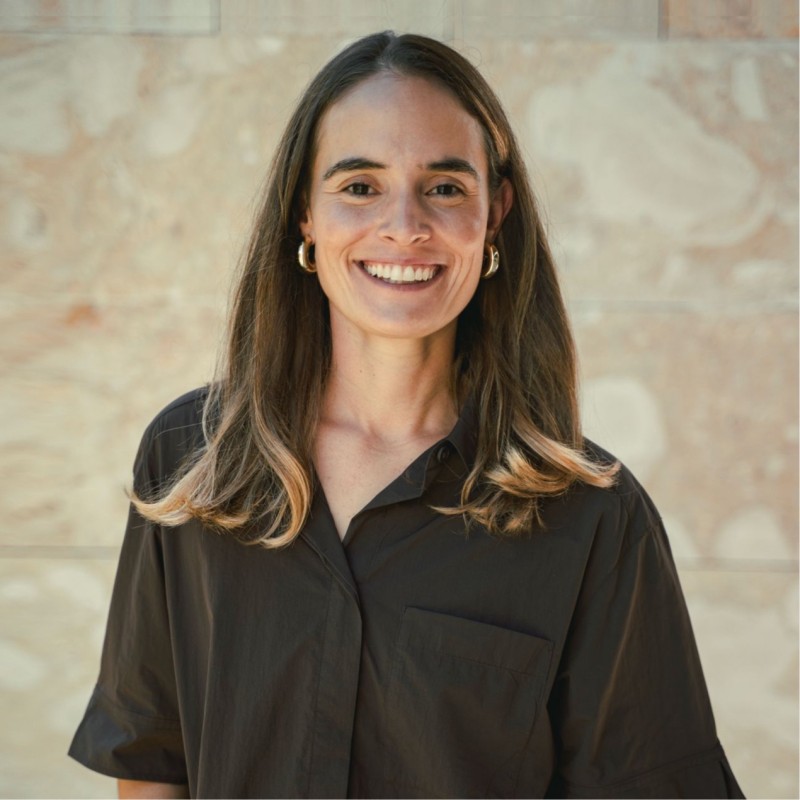
Valentina Jordan
CEO & Founder · NautaValentina Jordan is the Co-Founder and CEO of Nauta, the operational brain powering autonomous AI agents for global trade. Previously, Valentina led product for Rappi's largest business segment, building and scaling the core product stack behind Latin America's largest delivery platform. Her experience spans high-growth operations and investment strategy, including leadership roles at Amazon and Canary VC. At Nauta, Valentina brings a product-first, systems-level perspective to rethinking how global trade operates.
“Big ideas and big companies can be built from anywhere you are.”
— Valentina Jordan
Full conversation
Transcript
The transcript has been lightly edited for readability while preserving the speakers’ meaning.
Read the full transcript
tell us what does not do and uh tell us a bit about yourself.
I'm Valentina. I originally from Colombian but honestly have considered myself a citizen of the world. So I've been in the in the tech world for over 15 years now uh building from scratch. We actually help importers. So importers when we talk about importers are wholesalers, distributors, traders, manufacturers and retailers.
What's the biggest lie about AI in supply chain?
Oh, there's so many that it's magical that I've been saying that it fixes for everything. And I think the first one is that of this is a topic that I've been speaking a lot about and it's ROI that it brings ROI immediately like
do you really think it's true that uh most of them will not lose their jobs as as a result of this?
I think the people who will lose their jobs are the ones who don't see AI as a superpower and they resist it.
Welcome to the supply chain technology podcast. I'm Nabil, your host, and I'm so happy to have Valentina Jordan today, the CEO and founder, co-founder of Na. How are you, Valentina?
Great. Thank you so much for having me. Excited to be here.
Amazing. Amazing. We just had like already before starting the podcast, we already had like a great conversation, Valentina. So, we'll jump right into it. Valentina, for the people that don't know you and don't know Na, tell us what does Na do and tell us a bit about yourself.
Yeah, so I'm Valentina. I originally from Colombian but honestly have considered myself a citizen of the world. Um have always seen that the power of technology is actually connecting people and solving for problems that are bigger than us and so have been in the in the tech world for over 15 years now uh building from scratch. I was an early employee at one of the first unicorns out of Latin America called Rapi where I led product teams there. Um and with my co-founder Rafa who comes from the deep supply chain industry um we built Na and Na is the operational brain for supply chain um and what that means is that we help importers so wholesalers distributors traders manufacturers and retailers companies where at least 70% of their P&L is cost of goods so supply chain is a means to an end um run their whole operation from demand sensing all the way into warehousing
and the way that we do that is by helping helping them capture context, experience, and knowledge. Okay.
Through their data,
uh, and then through a bunch of agents, which is what we're all hearing nowadays, to automate processes. So, um, yeah, that's a little bit about me and about us.
Okay, great. Like, so um, tell us take us back at your uh, your history. So, yeah, you you talk about citizen of the world. We'll go into the detail of of how you do that and how you help companies, but tell us a bit more about yourself. Like you you born raised in Colombia, you talk about RAPY. So, so for the one that don't know, RP is um well, not only a unicorn because there's there's quite a lot of unicorns in in the region, but I think Rapi has made a name for itself as being um really like uh probably one of the biggest tech enabled last mile delivery company and for the one that are not familiar with the business, it's it's really big in in Latin America, Colombian born uh but have really expanded across the region. So, so a powerhouse of tech and and logistics in in Latin America, right?
Exactly. So last mile delivery almost like meet Uber Eats meets store dash meets Instacart meets everything very similar to um Asian models where you have everything brought to you even cash. Um so yeah I spent seven years um in Rapi building from technology u more in the B2B side of the business. So with retailers and restaurants which is a little bit of foreshadowing what we do right now because food distribution is big for us and then retailers are as I mentioned are big for us. Um, but for me and and and and rap is a big part of my story because it helped me understand that you can build anything that you put your mind to and transform people's lives from the inside out. And that's really what we did. Rapi operates in nine countries and and it transformed the way that Latin America was interacting with technology. Before and when we started, product wasn't even a role in Latin America. Um, you couldn't find it like no one was doing product. You had tech and you had sales, right? uh and through rapi so much talent started and so many engineers had new opportunities and and that's what not is also bringing we're connecting the corridor of Asia with Latin America and the United States and operating in in as a global company.
That's great. That's great. And uh how did you meet your co-founder?
Yeah, so as I said I mean I've I've lived in in quite a quite a few places. Right now I'm based in San Francisco because we need to be in the middle of everything that is going on and in the conversation with AI.
But most of my time at Rapia is spent in in Mexico and my time in Amazon in me Mexico. Um and then we had a brief period in Puerto Rico which um for those who don't know it's actually a pretty big economy and it's an island so it actually depends in their supply chain. At least 80% of what we consume there is has some sort of way been moved in a container in a container ship. by nature is an island that operates with a supply chain mentality. Um, and when I moved there, Rafa opened what for me is Narnia or Pandora because I think that one of the sins as human beings that we don't know how things arrive to our hands, right? And I always tell this to to my mom is like, you've been cheating with me. In Colombia, we say you have Nino, which is almost like Santa Claus and it brings you things on Christmas, right? And then Amazon just has things magically appear in your doorstep and no one stops and asks themselves how the heck did this get here, right? Like why is there food in the shelves? I think the pandemic kind of brought this a little bit on us.
Uh big exactly. So I became obsessed with understanding like how are things moving and and Rafa had felt that firsthand. Um he comes from a family business of of of distribution of global distribution. um and was obsessed with also figuring out a way to change the way that his family was running business for over a hundred years. Um so that's what we set to do.
That's great. I mean that's uh the combination of like you coming from the technology company um or background him actually experiencing the problem which is really kind of like a one of the the big yeah framework of a lot of entrepreneurs that start a business because they experience the problem themselves and they want to solve the problem. So so that's great. When do you make the the switch in your mind around a working for a technology company into this is big, we want to solve that and you go for it.
That's a great question. So after when when we moved to Puerto Rico after Mexico and after Rapi, I took I worked at venture capital for a little bit. It's this is bad, but I normally skip this part, but I worked at venture capital. Understood how is it that problems are are seen around the world? How to measure time? like is this actually a business or is it an idea and a feature? So spent a year in that and then after a year and meeting some amazing people. I knew I wanted to start a business. I just didn't know where and doing what. And so I actually took some time off to find myself. And I think this is extremely important especially when you're going to work in supply chain because everything is an exception. Everything is an edge case. Nothing's ever perfect. So I think the mental resilience that it's needed for everyone that operates in supply chain is I think significantly higher than in any other industry and so took some time off and that's when Rafa honestly came to me and was hey I I want to solve this problem. I just don't know you know how to approach this. I was very skeptical at the beginning because I thought it was a family business kind of problem but he was stubborn and I really appreciate this about him. is extremely stubborn and just goes for it and said no listen to me because this is happening with my suppliers with my peers with everyone around the world. So we took some time off and it was a significant three to six months to do deep deep discovery. We sat down with people in Chile in Argentina in Japan in Stockholm and all around Europe in the US in Latin America and we found that three things held true. Everyone was paying a ton of money for technology and the technology wasn't working for them. And for me, this was like a a wire broken in my brain because I've been building technology to actually solve for people's life. And how is it that you're paying hundreds of thousands of dollars and working on Excel? Like for me, that was just, you know, inaudible. You can't you can't do that. So that's the first thing. Second, it was very hard for leadership positions to make decisions because the information wasn't there readily available and it was living in a bunch of people and teams. And then the third which this is my passion behind building Nata and it's knowledge lives on people's heads. There's a lot of times no contracts. People have been in companies for 20 30 year rotation. It's not necessarily super high and so they know where the bodies are buried. They know how things work. But if they go on vacation, like this knowledge is lost or this is the typical person that cannot even watch the World Cup because there's a match going on and there's something more important going on with a recall of merchandise or a container that's stuck. So
I was like, we need to get this knowledge out of people's hair head and AI is the enabler to do this. So we spent some time again doing discovery and and there was a specific aha moment for me and is we walked into a Walmart office and there was still a fax and in my head I was like how on earth is one of the biggest e-commerce is a feeding like a referend around the world right that runs super robust supply chain still operating if this breaks where do you get a replacement like are they even available or is this just on eBay so I was like no
you buy your facts on on machine eBay and where else do you get
they sell them on on Best Buy. This would be a good one to look to look at.
Yeah. So, it's like if this What do you do? And so, I was like, "No, we're going I called it off. I was like, we're going for this." Like, there's something bigger than us here and there's an infrastructure problem in the industry because it almost sounds too good to be true. Like, I'm not a genius, you know what I mean? Like, the problem's there and we've been seeing it for decades. Why hasn't this been solved?
And I became obsessed with it. So,
that's great. That's great. you you did take a path that was unique to me or at least I have not seen this a lot but you started the company uh in Puerto Rico. Yeah. Right. So it's not um it's not that common. I do think that there is some some technology companies but not in supply chain at least that I've seen. Um tell us maybe the benefits
of starting there and then tackling I mean Puerto Rico is US territory for there is still some confusion sometime but but going from there from Puerto Rico and then really tackling you know businesses into the US mainland and so on. Um maybe give us like a good thing of that and maybe maybe one of the more challenging one.
That's a great question. So look, this is probably back from my experience on RAPI. We actually use the smaller economies to kind of like sandbox and test new features and test test new services um before going big. And I think originally comes from that one. And then two, Puerto Rico depends on supply chains. It depends like everything most of the food comes in a container. The internal production is very low uh for there's still manufacturing done there. Still comes in a container. It used to be one of the biggest pharma production regions for the US. So it supply chain is very very important and the bar is very high. And the reason why the bar is very high, it's because if something doesn't arrive, there's no plan B. There's not another local um distributor or manufacturer that can help you um cover for your for your opportunities because it's an island. And so the reason why we started was because of that. We wanted to stress test if there was actually a big enough problem and there was actually a way to solve for what we were going which was create of the data infrastructure for the global supply chains and Puerto Rico just seemed very high the the bar was very high and very very challenging. um that one. Two, the economy is actually bigger than what most people think, especially because if you need to move uh everything's imported, you just need to do it. And so on average, our clients that are based in Puerto Rico are moving between 400 300 and 400 containers a month. So it's pretty big uh big big volumes. Um you don't get that um necessarily from a bunch of of mainland uh importers or distributors. So it was a challenging starting point. So the good part was we stress test our technology very early on very early on. Our clients bar is very high and so they were very vocal and Latin Americans they have a lot of Latin in in their B in their blood and they're vocal and so we we had to prove oursel from very early on. And I would say third techwise it allows it allowed me personally to understand that there is no happy path in technology and supply chain. everything what would be an edge case is something that can happen and I think that is probably one of the top three reasons why building tech in logistics and in supply chain is so challenging because what in other industries would be something that would happen once every 100 cases here that one thing that happens one in a 100 there's thousands of them of edge cases so you got to build for the edge cases and Puerto Rico allowed us to do that so that on the positive side um on the more challenging side. Um, one that they didn't see us as a US company and the reality it is a US company and is actually has more complexities. You have the Jones Act, you have a bunch of you have inventory acts that affect clients. So, it is part of the US and it has more robustness than in others. So, that's one. Two, of course, getting the talent locally was not easy for us and so we have our talent globally. Um, er, but I would say those two probably were the most challenging. But we started global mindset since day one. We currently operate in seven countries. So we started in Puerto Rico, stressed out in Puerto Rico, but expanded um, right from the get-go.
No, that's great. So you already operate in seven countries. Seven countries. Yes.
So tell us like it's primary America's hemisphere or it's also some
No, it's primary America's herphere. We have a couple clients in Europe, but it's mostly US to be honest. We have clients in Argentina, in Colombia, in Guatemala, in Panama. So we're global. Um, and I think this is part of like our DNA is importers. So distributors, wholesalers, manufacturers, retailers, and and traders act on global by nature. On average, our clients are importing from 40 countries or moving trade from indirectly or indirectly from 40 countries with thousands of suppliers. So they're day-to-day solving for global challenges, global challenges in payments, global challenges in documentation, global challenges in languages. And so we knew that from the get-go we needed to be global to be able to solve for that.
Yeah. I mean when you touch international freight it's like it's like no doubt right like you have to you have to uh you have to help them across um
the entire journey right and uh
do you think that there is more complexity in actually starting it there and dominating that and then moving to the US or you would if you had to redo it would you do it the same way? I would do it 100% the same way because again like I think the secret sauce and we'll get a little bit deeper into AI into successfully implementing or creating a solution that transforms businesses from the inside out is a mixture between having a product that people can trust and it's reliable. Two, the relationships and the transparency and honesty to help them get there right and third the right gotom market motion to help them transition. to help them do the transformation. And so, Puerto Rico checked two of very important boxes, which was stress testing the stress testing the technology and building an outstanding product. And second, building the right relationships and the trust with companies that were in our backyard. And so, we learned how to run that motion. And then the third part was go to market abroad. And that just came more naturally because that's what I came from doing and expanding into nine countries with Rapi.
Yeah. Absolutely. So, you talked about the fax machine. I I love that example. Um let's change a bit of some of the thoughts here. So I've heard many times um what is to me like some some high level [ __ ] of uh people saying yeah the entire industry works on Excel and all this which is not true right like large businesses large logistic businesses large enterprise don't actually operate on Excel they do have technologies but you raised a very good point you said like well these technologies are not solving the problem or maybe they are not as good in solving this problem what do you see really being like the difference between using AI now
compared to before and how much of it is really like helping these companies build customized processes as as um we can do now with AI in a relatively low cost quick manner as opposed to before where you have like a SAS out of the shelf you know and and and it's very rigid and you cannot you cannot really customize it right like uh so
so you hit nail on the head so to your first question of before to now number one is that models got significantly better so we started developing NATA towards the end of 2024. We launched in January 2025 and from the moment that we started developing to when we went to market the models were significantly better and the models being better means more precision which is a non-negotiable in supply chains. It means speed to test new things and so the main thing is from before and after the the labs have advanced so much that it helps us right gain the precision that is need and the speed that is needed in supply chain. That's the first thing. Um, I agree 100% that they don't necessarily operate in Excel. The problem with the tech stack is that they're systems of record and you hit nail on the head. They're very hard to personalize. So, I we we have clients most of our clients who've use Oracle or or SAP and the reality is that for them to change something is changing it's like asking teaching the the pope how to pray, right? Like it's like it's expensive is changing a bunch of people. So that's the main difference between having a Gent solutions and SAS solutions is that everything is personalizable at a user level. But the reason why it's personalizable at a user level is because what's underlying is a data infrastructure. That's why we do things so differently at NA and that's why we do what we say that is the work that no one else wants to do which is structure the data. Um why are these people and going back to your point working on Excel? It's because a it allows them to personalize. B it allows them to control the input and then c it allows them to interact better with the information meaning they can create a pivot table they can create but it doesn't necessarily mean that they don't have the SAP that they don't have the TMS that they don't have the the WMS. Yes, they still need it because the the backbone the operation runs there. Um so what we see that's going to happen is there's and what we do is it's a membrane that sits on top the systems of record and it creates an action layer. their systems of action. Now, what we're realizing is that system of action is not enough because you don't want to act on data that doesn't make sense. Agents are not magic. They're great at what they do, but they're not magic. AI is not magic. So, you need context, you need experience, and you need knowledge to be combined into this.
Yeah. And I love what you said. We'll go into the AI is not magic, especially I think especially in industries like supply chain where
most of it is actually deterministic and it's not probabilistic. um you you um you talked also about um you know how do you personalize this and you build this infrastructure tell us a bit about that as well because I also hear yeah to build AI you need to have all your data organized and all that and I don't agree with that you know I I don't think it's true I don't think you need the entire stack to be fully harmonized as long as you do have quality data for the workflow you're trying to address you can actually work some workflows and you don't need to have the entire enterprise you know u fully harmonized on data. So what's your take on that?
No and thank you for bringing it up because I think we need more of this conversation. Our take is that data is not messy and data is not broken and we need to stop talking about the data is wrong, the data is dirty. No, the data is messy by nature because supply chain is messy by nature and you cannot clean data because it's transactional. It comes in by the minute. So you clean what you have and then how what's happening with what's coming in.
You have you have a new you have a new supplier and then they send you the information.
Exactly. So it's a never- ending process. So what what we how we like to call it internally. It's called return on mess. What does that mean? I'm going to give you instead of only ROI, I'll give you return on your mess and I'm not going to try and fix it because there's no fix and it's not broken. What I'm doing is making sense of it so that it captures into your knowledge, experience and context because the reality is that we don't most of what's happening in supply chain is perception what you interpret out of things because a bill of lighting is a bill of lighting but what you see and what I see are things completely different depending on our role. So what AI came in to do is capture that perception and structure it. So to answer your question directly is I agree like you don't need to fix anything but you do need to make sense of it so that agents and artificial intelligence can act on it because if not we'll just end up having more visibility platforms and we don't need more of those. We need action. We need u agents taking care of the dirty work that operators don't add value to the company's doing.
Yeah and uh you you also mentioned so yeah we don't need more visibility platforms right. So um I would agree with that one too. Um you have visibility platforms right and and the uh you have operational systems.
Yes.
What is like an out falls under in between or however you describe it or it's embedded. Um do you replace part of the operational system and at the same time increase visibility is it the full the full uh the full aspect there.
So we consume and we write back in both. So if a client has a visibility platform, we have our own integrations or APIs, but if they already have one, we want them to get their bang for their buck and to superpower everything that they have consume from there and then use that for the whole data infrastructure layer and agents to act. Same thing with their ERP. We're not trying to replace the ERP. It's still uh for data governance is extremely important to have an ERP. So we're not trying to do that. Uh but we consume from the ERP and then write back into the ERP. So we're basically the system of action of all their existing text tech plus their operational brain. So our very blunt take is that again most 80% of the data that is using this supply chain is still an email. And so you say yes they are not running on Excel but they're actually are running on the email because the email is the input and then we're feeding back into our systems of record which are the ERP, the TMS, the WMS. Um so we connect the email as well structure all the data and feedback. So not nowadays the action layer and the brain that captures context and experience and knowledge that is again humans have it and are the input that the secret sauce so that agents can actually transform and give the ROI that everyone is expecting from AI.
Great. So let's go deeper on this because I think when we talk about supply chain um there's obviously seaf freight, air freight, road, rail, you know the warehousing aspect. Um my understanding is that NATA really work on the freight forwarding part of the business. Um you correct me if I'm wrong and I think you mentioned to me earlier the the client base is a lot of the midsize larger size but midsize enterprise uh businesses. So can you give us like an example of some of the areas that you actually help them to solve on C freight I think which is probably where you started at least so that we get an understanding of
what do you help them to solve as an example. Yeah, for sure. So, we actually help importers. So, importers when we talk about importers are wholesalers, distributors, traders, manufacturers, and retailers. So, they're not in the service business. Their P&L is mostly cost of goods. Um, and what this means is that supply chain is a means to an end. Why is this so important? Because their main KPI and you know that this is the holy grail in supply chain is right on time in full. Uh, we need to target fill rate, inventory availability, cash to cash cycles. A lot of them are losing a bunch of money and with the front loing and everything that we had on having inventory that they don't need or that it's not rotating enough and their their their cash is tight on it. So we go for the big revenue generating KPIs which are fill rate and cash to cash. That's our main main use case. The way that we do this is honestly we're agnostic to their to to how they move the freight because most of our clients especially in mainland USA they have some import that comes in ocean then it is translated and it's and it's it's intermodal or multimodal it depends on how their business runs. So we're agnostic because we focus on the data because we don't give the service itself of the freight forwarding or the 3PL or the 4PL. We're capturing all of these data sets from the documents, the communications, the emails, and their ERP. And tr we're transforming that into workflows that target again cost savings use cases and revenue generating use cases. Revenue generating fill rate and cash to cash I would say are the top two of what we do. And then costsaving, which is the lowhanging fruit, penalty optimization, um hours saved of course by humans, automating a bunch of processes. So we always like to think about it in those two buckets.
Penalties like from like shipping for example on demorage or something.
Correct. Delays and demorage penalties that they might have with their clients right for not shipping on for not delivering on time. We all know that there's clear SLAs's on contract. So even being a few hour late can represent penalties. So everything around contract management and and optimization. And the reason why we can go personalized on these these use cases is because we're structuring and helping them centralize the data.
Uh this is aentic 100% because before this used to be done with OCR but the reality is that OCR is not good enough because
everything in supply chain changes exactly. Uh so we built basically our our internal engine our main agent extracts, contextualizes and structures everything that comes in not to be perfect but to make sense so that predictive analytics meaning machine learning models can use it and then agents can use it. How much of these use cases are actually replicable where you see the same problem like like the let's say the demorage example right like I mean demorage is is a well-known problem for many companies but
when you build a use case is this something you can replicate across most of the clients or you have to actually really do some level of personalization on each one of them
yeah so I'm going to answer the question too because I think there's some good stories here but so I would say 95% is replicable um and this is why working with n is better than building in-house because if you build in you're just basically starting from scratch. We've seen thousands of documents, thousands of patterns, thousands and of of containers and of of vessels being laid. So we have machine learning that help us build these predictive models and our clients benefit from this like network effect and compounding knowledge that we've built. So 95% let's say is replicable. I'm not going to say it's out of the box because that's the difference between SAS and and Agentic. But that last 5% it's really where the magic happens. And the reason why it's because every company is different. And I think the reason why some other companies haven't been able to make it through in supply chain tank and why it's so hard sometimes for investors to take the leap of faith is because it's so different by there's no centralized use case, right? You can have two different furnishing companies that run their internal processes completely different and that it might be more similar to a food distributor. I have chemical companies and food distribution companies that work their operation are more similar than between two food distribution companies. And so that's where AI comes in is that that 5% is the knowledge of their operators, the processes that they've had and that's what we go in and personalize. And to do that, we ship forward the poor engineers, which is almost like a we've made this the highest paying job in in the Bay Area now because everyone's talking about it, but they are the ones who are coming in mapping your workflows and helping you deploy and personalize.
So that's that's great. And you talk on the FDE um for deployed engineers. Um how much of this in your view is people trying to replicate the Palentia playbook versus I mean I'm I'm in supply chain for 18 years. In in supply chain there was the concept of an in-house person
that goes into the site of the clients and work from there and is is is embedded there and like work with them for like
at least for 16 years. Yeah.
I remember but now I see everybody is like FDS FDAs FDs. uh um do you think it's really that palenteer influence or there's something else to that as to this being a gamechanging into the industry on how you deploy? I definitely think there's a palunteer influence. You we can't deny that. But I do think it's more of a AI and momentum kind of thing. And the reason why it's because again AI is not magic. Um AI requires feedback. AI requires investment in terms of uh people giving their knowledge and transferring their experience into it. And what FDs actually do is teach people also how to do this in a way that it's not overwhelming because there's so much buzz out there. Um I do think that this can become very expensive and it's not necessarily needed for every sort of client. But if you do want to transform an organization, you do need to have someone house. I think Palanteer made it sexy. I do think that we've seen it even with the traditional SAS for a long time. you have to implement SAP, you need a consultant that is certified by SAP. That's
so I mean again we made it the like the hottest job in the Bay Area and now they're expecting like huge salaries but the reality is that it's been around in different shapes and forms but for AI to be successful I do think you do need a FD motion more because of the change management and having the right stakeholder management inside and the personalization but
yeah absolutely I I think I think the role makes a lot of sense. I just I just think we have an entire rebranding that that's been that's probably one that's probably been like the biggest
job title rebranding of history. I think we could go and and and talk about this and
the next one's going to be manager of agents and not we already have 14 agents that are employees that run like day-to-day processes. I mean they need a manager at the end of the day. We we run them with buddies. So there's a human with a man like is a manager of an agent. But the reality is that I think the next one that is going to be is managers of agents is the next hot job that we're gonna see. Yeah, I actually it's funny you say this because I've seen actually a post from uh from Sally the the CIO of of of DHL talking about this as as one of the one of the roles uh also that should be uh
should be already uh coming up soon because obviously the more you deploy the more you're going to have also diversity of agents doing different things and so then making sure that everything is actually running smooth uh is going to be really important. um you um you also touch on the build versus buy right so and and you told me an interesting story about the you know the midmarket particularly um tell us about what's your view on why maybe the midmarket makes more sense
in term of like target and how do you tie that into your build by you know motion of like companies doing different things
yeah look I'm very opinionated here so I need to control myself but
it's okay just go just go don't worry The reality is that build versus buy is going to happen naturally. It's we've seen it in other industries like we've seen I I I worked at the bank that Rapi had for a while. And the reality is that in payments we've seen people want to build their orchestrators. People want to build their own things until they realize that that's not their core business. So why are you going to start building things that are not your core business? Let's say with a I don't know a food manufacturer or a distributor of some sort. Their business is to manufacture food not to build agents to to solve for problems. So, I think it's natural uh and I think it's normal that we're going to be seeing a cycle of people trying to build it until they realize that it's just consuming too many resources, too much money. Tokens are expensive and so if you don't do it properly, and if you're not optimizing, it will go out of whack. So, first thing to put it out there is we're going to see it. It's normal. Second thing of why we love the midmarket is because we actually are in the business of transforming people's lives as I said from the beginning. and most of the mid-market. And where we're talking about mid-market, we're talking about um companies, importers that have $300 million in revenue to five billion dollars in revenue. So, you're not quite your Fortune 500 companies. Um they still have very big operations and normally they have IT teams, not tech teams, and there's a big difference there or they're outsourcing their their their tech services. So, they're actually looking for partners to help them transform. And that's what we do. We sit down, we explain to people what's an agent, how does it operate, how to train it, how to give it feedback. Um, we're not out of the box that here's your agents, just do it yourself because that doesn't work in companies where again that's not their core business. So, um, we specialize on that. We specialize on helping people transition from being used to their SAP and their and and and their Excel and their email into understanding how to superpower with AI. Uh that being said, our moto and our ethos is that we are helping operators become managers. Okay, we think that every operator is going to become a manager of agents and they are all their knowledge, all their context, all their experience is going to be superpowered by these agents. They're not necessarily going to lose their job. They're going to be managing managing a series of agents that are um helping them take away all of the nitty-gritty work and they are making decisions. So that's how we do it. Do you really think it's true that uh most of them will not lose their jobs as as a result of this?
I think the people who will lose their jobs are the ones who don't see AI as a superpower and they resist it.
Okay.
Um I think resisting is the worst thing that these people can do because I mean it's like when there was the the cell phone came out and there was a lion line. If you resist to getting a phone, you won't be reachable. So if you have a job opportunity or something comes up, you're gonna be the person who's not gonna find out. I think that's exactly the same thing that's going to happen here. The people who are investing in understanding how it works that are playing around with it that are actually proposing to their companies how to use it. I think those are the people who are not going to lose their jobs. People are finding how not to get that help and and resisting. I think those will
Okay. How do you help these companies to do that change? Like how do you convince these people? Look, I think we we use two frameworks and we actually I I I love Granola, the noteaker as a product and we borrowed Okay, beautiful. Um, so we
I use it every day.
Every day.
So seamless. It's so natural and and that's exactly the experience that we want to see. Um, so first thing is we work with clear goals. Okay. I think one of the like pluff with AI is that I and we've touched this the third time I say this and it's not magical. It's because I want to ingrain this on people's head. AI is not magical. AI needs to have a purpose and the purpose is a KPI or a number that you want to move inside your organization. So what we do is we set a KPI, we have a baseline and we have a target. If the client cannot choose a KPI, a baseline and a target to start with, we do not work with you and that's as close or clear as that. Why? Because if not, you're expecting it to be magic that I'm going to come in
a KPI.
Uhhuh.
A target
and a baseline
and a baseline.
If you don't have a baseline, I'll help you measure it. No problem there. We actually have a bunch of agents that we drop them into your email and extract patterns how things are going on because a lot of companies don't have their baseline. So, we help you. But if you don't have a baseline or are willing to have a baseline, if you don't have a you don't work in a target number with me and you don't have a KPI, I won't work with you because that means you're expecting for me to just come in and open, you know, my opins and do much
and that's not gonna happen.
It's not gonna work out. Yeah. Do you think that's the reason why this 95% report came from MIT? That's said% of the votes. I like it. I like the three points.
There's no north no star. So first thing is that and then the second part of the framework which is what going back to granola what we borrow from the CEO is that we have a matrix that we sit down and talk to clients about. And it is we need to find a point to start that is very frequent and it's very important for your business. And I'll pause there for a second. Why to start? Because you can't try and do it all at the same time. And you mentioned this like you don't need all of your data to be perfect. No, you need to start with certain workflows. You don't want to cover the sun with one hand. It's impossible. So what we sit down is, hey, we map what are workflows or or use cases and numbers and KPIs that are very frequent. Why frequent? Because if something is doesn't happen very often, you're not going to see the impact. And you want it to be important. So important is has a ton of it has misas, right? It has stones. Important can be in terms of cost reduction or it can be important in terms of re revenue generation. We help our client figure that out and we in our matrix we choose a KPIs or workflows that are both important and frequent. We normally start with three and we run a like a a very controlled scenario with three of those of those um use cases and expand from there. Why? Because you want people to see that their baseline and their target is moving faster than what they would ever imagine, but it's controlled and they still feel that they can they can have inherent over it, right? Because the one syndrome that we have in supply chain is that we're control freaks. We want to control everything. So you want to have scenarios where the operator still controls. They're seeing what the agent is doing. They have a northstar that they're working for. They have a baseline of where they started and they have a target which is what we're moving. So that's how we go in.
That's great. I like it. I think the framework is useful for everybody. Uh I mean KPIs and target often comes but I do see a lot of companies that don't push that much for the baseline and then it's really hard to also you know it's like the same you know so many times I'm asked like hey how impactful is this technology in term of productivity improvement you know and the numbers could be you know you could ask two companies and the numbers could be three times why because the baseline is different right and so if you go like into robotics for example people are like well but this company is is is you know getting like three times more than you. Why is that? Because of the baseline, not because they are more intelligent. So, so I think I love I love the the baseline point and I think it's valid for everything actually that you do. Um what's the time to value or the return on mess or the return on investment like because I this is what I've seen being like really to me was the biggest difference between AI application the right application to the right place compared to other SAS is like the time to value is incredibly fast if you if you can nail it really well. So that's a great question and and and for us it's seven days but we have to deliberately yes you have to deliberately choose for it to be seven days and what do I mean by this? One of the big mistakes that we had at the beginning with Nat was that we were trying to solve for too much like very complex problems because the client was guiding us that way and we're like we'll help you and the reality is that you eventually get to that but you need to have the building blocks first and these can be very simple use cases like classifying documentation and doing reconciliations and three-way matches between purchase order, packing list and and and invoice. So very simple things that actually represent loads of money that is being lost. Uh but it's not something super complex. So we
it's not complex technologically but it has
exactly or it doesn't require a bunch of stakeholders to be involved. It doesn't require a bunch of systems to interact. You want something that is very clear where the information is coming from that you have one or two two stakeholders involved that can actually give feedback and that can actually feel tangible impact. So first big lesson is don't try and do too much because if you try and do too much the time to value is just longer. I cannot move fill rate in three months. Let's be honest because sometime some of the products are not even have a cycle of three months. So
you want to start with something small. So
you have to deliberately choose. So seven days but you have to choose very simple workflows. We push our clients very hard for that. We tell them like this is too complex. You're not going to move the needle. If you want to see the impact of AI, you need to go start from small and go into big. So that's why we land and expand. We always start with the logistics or the supply the procurement teams in companies and we already work with warehousing teams. We work with customer service teams. We work with finance teams within those companies. And the way that we the reason why we're able to do that is because we show value very fast and then we have the data, we have the infrastructure, we can expand from that. So that's how we that's how we've how we've done it. Um but it's on the provider to be very clear with a client on telling them if you like for us to achieve really fast results and time to value it needs to be something simple.
U you can't over complicate things.
Yeah. No, and I think I think you're spot on on the fact that if you do it if you do it that way, you actually right away win credibility already on credibility and then from there you can move on because if you are successful even on improving meaningfully a small or simple use case um then you have the right to be at the table for for bigger things.
Exactly. Exactly. And this is an industry where trust is the main currency. And this is something that I speak with my team and we speak about it day in and day out because this is an industry where my clients sometimes don't even have contracts with their suppliers. like they've been working for 20 30 years and I mean there's a trust bond here and if you break it like you know there's a relationship a marriage broken but so they expect that from us and so we're very direct we're very transparent and we manage expectations like it was never happening in SAS before because you want people to grow to trust the the the platform and the agents and then expand with you through it. So
yeah.
Yeah, absolutely.
If they're not willing to bring down again to baseline target and KPI, we respectfully say we're not the right partner for you.
No, it sounds great. And so you talk about trust. Um and you talk about relationship. Um I also see this often that people because they're building technology, they believe that maybe as long as you build a great product, that's that's okay. Um, I don't think I don't think most of the companies actually operate that way. I do think that maybe it's my bit my old school uh, you know, I'll take it. It's okay. No, I'm not I'm not 25 anymore. I
But I I do think that still most of the people that are the decision makers of these businesses relationship is extremely important. What's what's your what's your take on this? Especially from a tech founder, I think it's Yeah,
look product is not a moat anymore. That's the reality. It's so easy to build. It is I think there's also a misconception going a little bit back into the build versus buy that because you can sit down on cloud code and you can prototype something you can take it into production that first 90% you can but the last 10% is very hard for it to be reliable scalable you know so the first thing is yes product is not a moat anymore because it's so fast it is not as easy as people are saying it is but um you need to build on other things and for me the mode is relationships the mode is speaking the language I spent I've spent two years obsessing over being able to have smart conversations with my clients because I do think that this is an industry that is not seen right how many people can sit down I can go into a cafe in San Francisco and everyone is speaking about AI where can you sit down and speak about I don't know cold chain problems or negotiating terms with a carrier like it's not commonly spoken and so you
maybe that's true pictures
but in general like people are not aware of it and so I think we need to bring that awareness and part of the relationship that we built with our clients is sharing that knowledge, sharing everything. It's very consultative of what are we learning on the industry and and what things they can bring into their business to to to improve it. So, um yes, product is not a mode. Trust is the currency. We take this extremely serious. We manage expectations. We're very clear and direct with our clients and we're there to help them in the transition. Um most of our clients don't know, I think I was saying this, what an agent is. And honestly, I think there's a lot of empathy to be built here and help companies transition into this new world of new era of how we're being interacting with data and AI and you name it.
Very interesting. We we and challenge me if you feel different but we still are missing in our industry that we are passionate about. We are still missing like a big success story. Yeah.
Right. Um I think there was a lot of um momentum and and hopes that maybe a flex sport or a project 44 will be that. Um I think I doubt it will be. I mean both both probably end up to be a a a relevant businesses and so on but but maybe not to the scale. And then you have like the more of like the traditional players, the likes of KGO wise and and and the cats and so on which some of them have have done pretty amazing on the public market. Kag has taken a bit of a really challenging time. Yeah. The last 24 months for different reasons, but why is that? What what do you think needs to happen there? And are we going to see like a massive success story there?
I mean, I definitely think that it's going to be not
an Airbnb an Airbnb for supply chain type of story. Look, I love that they bring this up because I think there's an I don't it's not a problem, but it's an infrastructure challenge. So, if I go I was in London last week in an event and I go with my I don't have a Colombian credit card anymore, but a Colombian credit card, a US credit card and I can pay the smallest coffee shop, right? My for my latte and the credit card will go through because you have a merchant, you have an acquire, you have all the rails for things to flow through. In supply chain by nature that doesn't happen because you have a you have manufacturer you have suppliers you have carriers you have brokers you have a financial institutions you have insurers and each of these stakeholders has their own system their own ways of work and these systems are not connected we have an infrastructure challenge I'm not going to say it's a problem and it's a challenge so it's very expensive and it's very difficult to innovate in this industry where you have to control so many different parts so many different systems from so many different conversations into a single um solution. So I think that that's why it's been so challenging to create disruption is because you need to have so many people aligned to be able to do it. Um that's the first thing. Now I do think it's going to happen and why AI is enabling this to happen. It's because data is what connects everything. So for us the framework that we've always used to work around supply chain is that it's divided in three main buckets. the movement of goods, the movement of information, and the movement of money. And if you think about it, these companies have always been focused on optimizing for the movement of goods. But let me break it for you. The reality is that you need to move information and you need to move money before you can move the good. There's actually a prerequisite. So our approach is we're moving information and sue money to be able to optimize for and create this connectivity between these different stakeholders and allow for innovation to to to exploit. So I
are we hearing a product release on money on
it's coming it's coming pretty soon it's coming pretty soon like we've been working on it and so the movement of money it's it's super important on average an importer aka again wholesale distributed manufacturer is paying between it depends on the order but anything between eight to 20 payments per purchase order it's a lot of payments and normally they're super fragmented so there's more to come there um for us but again like our vision is that if we solve for the movement of information which is fragmented and the movement of money which is super inefficient. You can create the right infrastructure for innovation to happen and not only NA but we see NA enabling for other innovation and other and other solutions to come out. So u that's the reason why I do think it's coming. I'm convinced that NA is it uh because we're doing the work that no one wants to do which is creating the data and the move movement of money.
Very good. give us a I didn't ask you this but give us um a sense of like seven markets what's the scale of the company today whatever metrics you feel comfortable to share
yeah so we're working with over 60 clients now again like these are from enterprise into midm market and the reason why we go for mid market is because we want to transform the world and we see that most of them are there um
yeah and it's very fragmented right I mean often times correct about Walmart and the likes but but at the end you have like
tens of thousands of like businesses that are in the hundred millions and above Exactly. Um we are processing over 100,000 documents um consistently over weeks. Um so it's it's it's high volume on average. Our clients are moving between as I mentioned before 300 for 100 containers a month. So it's pretty big operations. Um it's companies that most people don't know are there, but they're feeding us. They're clothing us. They're those are the guys that no one knows are there. They most likely don't want people to know that they're there, but they're powering it. Um and we keep growing and scaling significantly. Um we keep we're expanding again uh opening offices stronger in in Botaa in Mexico um and are doubling down or on our Latin America footprint. We were focused 80% of our business is in the US. Uh and we don't intend that to change in the next year. uh but we're doubling down in the emerging markets again and then Asia is coming pretty soon because we see that we have a very competitive advantage which I mentioned earlier which is connecting corridor between Asia, Latin America and the US. Uh we are we know it perfectly our our team internally has been lived in Asia for a very long time. We're Latin by nature. I'm Colombian and then we're operating 80% of our businesses in the US. So uh we're connecting that perfect triangle that powers most of the world. one of the interesting uh uh the way you're building the team and so on. One of the thing I I often get asked and and I'll share my opinion after yours is can a solution like na replace a magaya as an example or replace a cargo wise over time. What's because
there's a difference between at least to my to my view is there's a difference between operating system
and system work
and the system of work. I mean some people tell talk about system of work some people talk about system of action. you know there's kind of like now there's kind of almost a new category where you where you said before you said yeah
I don't replace it but I'm pushing information in and out into this right
what's your view
I think it's not the right approach right now to go and replace it I don't and and and the reason why it's because there's data governance issues and and and and to be solved in order for that to be done um I think that these companies either need to adapt into a gentic era it's very challenging because transition ing your infrastructure from a traditional SAS course into Agentic is basically reinventing yourself. So I think they will eventually either migrate the way that they do their business or there will be another player that will come in and do it. Uh but the big question here is where is data stored and where are the data governance protocols and again that's our cup of tea and that's what we do. So I do think that eventually things will evolve as everything. It's not necessarily replaced but things will evolve. Um, I don't think the right approach right now it is. I think it's asking too much of companies. Yeah. To change everything and I I think it's almost disrespectful to try and do that right now because it's just bringing too much pressure into companies. So,
yeah. And there's a big risk into it, right? Like um but do you think that over time you take more and more of the actions into an agentic workflow and consequently the ERP
might remain but it might just lose a lot of relevance. It might just be the integration point or the hub, whatever you want to call it.
100%.
Okay.
Yes.
Great. What's the um what's the biggest lie about AI in supply chain?
Oh, there's so many that it's magical that I've been saying that it fixes for everything. And I think the first one is that this is a topic that I've been speaking a lot about and it's ROI that it brings ROI immediately. Like I think we need to stop chasing and in every industry not only supply chain we'll go deeper into into supply chain but when you run a PC or when you start testing something I think one of the big mistakes that management teams do is go straight into our right again have a baseline have a target and have a KPI and move the needle for the organization and build into robust ROIs because the money is there like we've had clients that have 83.3x ROI we're double digits on all of our clients but you need to build into it into more robust workflows. So the first one is chasing the magic ROI from day one because you'll be focusing on the wrong um on the wrong metrics. You want to focus on moving the needle on on operational stuff first. The second one is that it'll be fully autonomous right away. Look, I we all work I work really hard to build. We're we're agent first. We're AA native. Like we have we're not growing on team necessarily except on go to market. We're not hiring more engineers because we have agents that do the engineering work and my engineers just approve PRs, but it's not autonomous on its own. Like the industry is not ready because it's so fragmented. Yes, you can run autonomous workflows and autonomous work processes, but I don't see it being a fully autonomous in the next one year, one year and a half. So,
I think it's a lot of marketing. Um and I think the the superpower is working with companies to make autonomous workflows, not autonomous departments yet. Um and then the third thing I would say is that u just putting an agent yourself for everything because as I said it's knowledge, it's context and it's expertise and that's still held by humans. That's why for us it's the company brain and we're the operational brain is what we're delivering to you so that you have knowledge, expertise and contact that your humans are have had for decades and that it's your biggest IP, your biggest intellectual property actually under your hands because right now you're losing it if the person leaves. So that's really what now is actually giving clients. Is that the most exciting part for me? Yes% is the um
I don't know if I call it centralization but it's the uh really that that visibility of the entire knowledge base.
It's beautiful. It's beautiful to see how
how do you do that like how what does because this lives in now platform right like so how does how does uh
so it's very simple it's divided on three industry company and user level like knowledge context and expertise. So industry is the stretch of very muse is closed. Ex-president tweeted something. The price of X went up. So we're cap we're capturing all these signals and inference. We create a continuous loop out of what's going on in the industry and in the world. Second the company. So when we go in and in our whole implementation process, we're capturing if there's contracts we'll take it. But in signals from the email, signals from behaviors of people, meetings, everything that they do. And we built the company brain and the company knowledge. So, is how do you work with supplier A versus supplier B? What's the supplier that always is it's covering your back when when something doesn't arrive? What's that one product that probably doesn't rotate very much, but that this client needs it because it's their staple? If it's not in their order, they won't order from you. So, we capture all of this like unwritten knowledge. And this comes again from the behavior, from the emails, from everything. And we built it into a continuous inference loop that keeps learning. It's always learning. It's live. That's why this is so exciting because it's it's like a living being, right? And then the user, which is super important, it's how do I, for example, Valentina, what's the first thing that I prioritize in the morning? There's some there's a story to tell behind that. Is it because my my boss is always asking for this report? Is it because it's the product that is always arriving late or is it because I'm always paying penalties to this to this client? So we capture that that that behavior based on how they use the platform based on what how who they're calling. We we're again we have voice as well. So we're we're intercepting all these and making it an inference loop and that's your company brain. It's in it's a mixture between industry company and user level behaviors.
That's really interesting.
And agents consume from that.
Yeah. And that's how you create this really this pool of knowledge that then becomes your also on what you train the model. Exactly.
Uh how do you keep the IP specific to clients?
So we separate everything on tenants and we do share analytical data which benefits everyone. So again, let's say I don't know I already know that a certain that that because of I don't know the during summers there's a a slowdown in shipping from Europe I'm making something or in August something happens that's analytical data that helps everyone and that's what's shared but the company brains itself so the things that are not the industry that are company and user are in separate tenants and in separate brains for each client so I'm actually helping them capitalize on their IP which is what they're losing on people's inboxes, on people's minds, on people's tenurs in their companies.
Is there like um another haha moment that you've had um as part of like the work you've done with a company that you felt like oh my god this is like so inefficient like the fact story of Walmart but like more towards like a client where you like we are seeing something here that really makes a big impact for them. There's a lot, but I think seeing seeing an agent recognize their work, I think it's one of the prettiest like the most emotional moments for me. And I will give you an example. We've we have um
emotion you use for me. It is because I'm seeing I mean my user persona is someone that has been in the company for 20 30 years and that knows how to use what they use on a daily level. Like they're not techsavvy, they're not tech forward necessarily, right? And so and they're very
not at all most of the cases. Yeah.
And and and they're very comfortable with their processes. Their processes are almost like band-aids that have been built over years. And so they're nervous. And so it's emotional for me because when they see an agent recognize that it's something that has been hard for them for so long and they see like, oh my god, they know that if I don't order this by 10:00 a.m., it won't arrive on time. We have a scenario with Christmas trees. Christmas trees is a big one. So we have a client that sells Christmas trees. They're a retailer. Um, and so they need to order the Christmas tree by February so that it arrives by August and it's in the stores by September. It's a seasonality thing. And this is not written down anywhere. They just know that they have to do it. And so one Marquez, our inventory management agent, started to pre-place the orders and Marielis, which is an operator, um, she had the orders pre-place for her. She's like, "How did it know that I need to do this? Like I'm struggling, you know, on February running because there's other seasonality going on." And so it's it's emotional because you're seeing people that are not seen, that are not recognized, that their work is, as I mentioned at the beginning, they're on Friday night with their husband having a bottle of wine and that they get the call that there's a recall. They need to stop what they're doing and fix things. So agents are doing the work for them. So I think it's one
everything around recognizing the work that it's not seen and we had like the Christmas tree. It was crazy because she sent us an email. two, having clients actually become our biggest like pollinizers, you know, like they're like bees and tell calling other people and saying like you need to use Na because I've saved so much money on this and spreading the word is amazing because that's where you see that there's real ROI and people actually believe in
that's the best way to grow.
See, and then the third I would say is people like having agents see patterns and take on work that people didn't realize that was there. So examples of this um arrival notices are a big notion as you know and so a bunch of containers arrive at the same time on a vessel for a specific route and normally operators need to take those arrival notices notify depending on how their business work their clients talk to their customs brokers and emails. We have an agent that literally splits up those arrival notices. So if you get 300 at a time it splits them it classifies them and it sends them to the specific stakeholder notifying the status. This takes hours out of a person's time. So when we go in, we connect to their email and we tell them, "Hey, they arrive notice is probably taking you five to six hours out of your Monday and Tuesday," which is normally when all these things arrive. Yeah.
Um and they didn't even know it was taking that. And you give them that time back and they're like,
"How on earth is this happening?" So it's about the little things. Um it's about the little little details. Again, the ROI comes, the savings come. That's with the managers. What really is impactful is seeing these people that have been working 20 30 years and say like spreading the word that this is so good for them.
Yeah. No, I I I would imagine that it's at the same time like exciting at the same time surprising at the same time probably sometimes a bit scary also. Um let's talk let's talk about money. Let's talk about money. So last year if I'm not uh mistaken you raised um seven was it seven?
Yes. Yes. And now you just raised a also another around a tell us tell us maybe about that and actually I didn't realize that you also worked on the other side you worked on on the investment side so I think that's a that's a big advantage that you have there because you understand how people think on the other side in ter of investment and so on but uh tell us about the last raise and why and and uh and how it's going to help you. Yeah. So, look, we Rafa and I have been a little bit contrarian in how we raise money because of course money for us, money is a means to an end. Um, just as for our clients, supply chain is a means to an end. Um, and it's a means to an end because supply chains are here to stay. This is not a category that we're creating. What we're creating is a category in the way that we work. And so, having the right investors that understand supply chain and that are with us for the long run has always been a priority. we actually very early on have turned down money because there were not the right people to be with us in actually transforming what it's a very difficult industry to penetrate. So um for us it's always been that way and and and we've been very critical. Our seed was led by construct and predictive. They invest in traditional real world problems a lot in supply chain and now this is a strategic round that we decided to take because it's expanding a lot into what we're going for which is a bunch of deep manufacturing. So uh we had the privilege of now working with Bosch um with BMW with Yamaha and with Hitachi which um are backing us up to expand globally. I think I briefly mentioned Asia expand on our money movement of money efforts which is something that it's been cooking since day one but we we're conservatively working on um and expanding our our coverage on this midmarket. We do believe that the midmarket it's it's where we can actually transform the supply chains from inside out. Um and we're doubling down our go to market efforts to to keep expanding there. So um
US still number one priority.
You all of the Americas is is number one priority for us. Um still US is is our main market given the size and and and and this the size of the market and the companies. Uh but we're we have coverage all in the Americas and Asia is coming on 2027.
That's great. That's great. As we wrap up, I'd like to ask like some more like general questions. So um who is somebody that you look up to in the industry first in supply chain that you think has done a great job that um you think has and if we can try to stay away from like the obvious ones you know maybe the the big you know the Jeff Bessos type of people but
that have changed everything
that's a good question
that have have done you know
look I I think Eric from from TPM um is great because he's putting a voice and he's not scared scared of saying what people don't always want are willing to say. So I think the voices out there right now that are not scared I think it's super important taking the elephant out of the room. You giving this space for people to actually share what's going on with with no taboos with no with no bluff. I think it's super important. Um so I would say Eric is is big because of the voice that he's putting out. Um I do think that right now what we're living there's a big responsibility of you mentioned it like the visibility platforms honestly open a great path for us but now it's time to prove that this can change. So we need to bring more investors into into supply chain and which has been an area that is normally difficult to get to get capital in. So all of the voices out there I think are are super important. Um, I do think though that bringing people that are more in the CPG world, in the retailer world, all the ex we we work a lot with XXX of Walmart and everything into the game is super important for founders and for people working in technology because if something holds true in supply chain is that you need to speak the language and you need to be an insider to actually transform. This is not an easy industry. It's a industry full of slang. is an industry that if you don't haven't lived it firsthand, it's very hard to gain trust. So, I think it's a mixture between, as I said, the voices and the experience is what we need and and who we should be looking up to.
That's great. Well, Eric, that's a nice that's a nice compliment to you. Certainly. Um, do you think we need more women in supply chain? I'm not I'm not I'm not gonna go I'm not gonna go into the I actually would love to have like your true opinion on this because yeah I think it's really it's a really interesting it's an interesting point as a founder
building technology in the industry
I've always done very manly things in my life like I played soccer in Colombia which is big on boys I you know I always take on the big challenges I feel like my dad almost raised me to like go you know um do things so yes and I think we need more women in not only starting companies but in supply chains because they're very masculine. Um, Erin, I think we can't be scared of of having the tough conversations. I, again, I'm normally surrounded by a room of 50-year-old white men, you know, who are the ones making the calls. And I think what allows you to have a seat in the room is be an expert on something and being very confident that you also know what you're talking about. And I think um, in general, unfortunately, that doesn't happen. But there's some amazing women in supply chain that keep standing up and we need to nurture that even
anybody anybody that you kind of also like maybe not necessarily look up to but that you think um you know does represent
No, I think that there's more VPs of supply chain coming in um in companies that I'm starting to see not a name that I can name you know off the bat but I'm seeing you know that after the pandemic the role VP of supply chain actually appeared. it didn't really ex exist before and I'm starting to see more and more women in this role. So, I love it. Um, we need more of that is what I think. Um, but again, it's it's it's a rough industry. It's an industry that requires a a lot of of grit and resistance. So, I understand not that women don't have it, it's just that biologically the productivity age people start to have kids and I think it's very related to why we don't see more women in this. It's 247 supply chain and kids are also 247. So I think that's there's a direct correlation on why there's no more women in supply chain.
I love that. I mean I love the fact that we need more and that uh I do think it's important to bring diversity of different type into into because to the point you made earlier is this is a global topic right I mean even if you're in even if you're an importer in the US you're dealing with suppliers from anywhere and uh and u so the diversity is very important. Is being a woman Latina from origin building a business in the US raising money in the US a relevant topic or not?
It is. Look, I think that immigrants wherever we are like you have to work double as hard, right? Like in general, you know, even to get your bank account to get everything. So I think there's the conviction that is needed. Like I there's not a single cell in my body that doesn't believe that NA will transform the way that people run their supply chain. And I think you need that to actually work in an industry as hard. And I think there's pros and cons. It depends on who the investor is and depends on where where their biases come from. It depends on what they value and that what they prioritize. But one thing that I'm going to say is like as a woman, yes, there's more there's I hate to say this, but there's definitely more challenges. And being an immigrant, there's definitely more challenges, but there's an advantage and is that we're willing to work
twice twice or three times as hard. I mean, you're an immigrant as well than than most people because we need to see be have ourselves seen. Um, and I mean, I'm definitely willing to do that. So,
yeah. And so, I I just want to double down on that one because I really think it's important because you said something around yes, you have to work harder and so on, but if you do,
like I never felt it was a problem, you know. And me, I'm a double immigrant because I was an immigrant. My parents were from Morocco and then they moved to France and so I grew up as as an immigrant in France. Uh but then I moved across different places but I never felt I never felt that that was a problem. I do think that you do have to work harder but I never felt it was a problem. So is it a problem or is just a matter of actually no actually it's a it's even an incentive to just say you know what
I am going to actually I'm going to work harder and I'm going to put the more effort and and and that's okay and then there's no really a negative impact.
Look I think that ambition is independent of where you come from the experiences that you've lived. I think there's people that are just very ambitious independent where they are and and see opportunities of when and where there's challenges. Um so I do agree with you. I've never seen it. And I hate honestly when people are like, "Oh, you're the only woman." Everyone's like, "Don't notice me like that. I'm another person sitting here with an opinion and bringing something to the table." So, I agree with you. I've never seen it. I never notice it. I think it's it's the right thing. And it's because it's tied to ambitious. Uh I've always wanted to do big things and I think it's it depending on your race on where you come from, where you you're either ambitious or not. I think it's actually very binary and it has to do a lot with your upgrading. Uh it makes you be I think a little bit more ambitious if you're outside because you need to prove something.
You're the underdog. You're the underdog like uh like now in the World Cup, right? The underdogs. People people also cheer for the underdogs.
Um
so that's that's that's really uh the Do you have a message? Um I know a lot of so I lived in Mexico and I lived in Brazil and I worked for many many years in the region. Do you have a message to entrepreneurs that are from the region that have a doubt on tackling a market like the US thinking that this already done everything has been done or it's going to be hard to compete?
Is there any inspiring message to wrap this up?
Yeah, look I think when you come from developing economies um we see opportunity where there's challenge and I think we need to use that always to our advantage. I think that thinking that things are already fixed or done is It's too much of a developing world and we need to keep that grit of of seeing everything as an opportunity. One and then two don't be scared. Um I do we have our natada house and which I was sharing in San Francisco where we're bringing engineers our engineering team from Argentina from Colombia from Mexico so that they can get exposed. Uh but the reality is get exposed to the world get out of your comfort zone because big ideas and big companies can be built from anywhere you are. Um but do surround yourself with the right people to get exposed to the right idea. So don't stay in your comfort zone. Get out of there. Um that's the reason why I moved to San Francisco having coffee and speaking about deep models and how inference loops are changing and how agents are out of teaching themselves. Like it's something that you need to be able to be competitive. So yeah,
that's what I would say.
Absolutely. Well, Valentina, amazing. We could stay here for hours. Thank you so much for joining the the podcast. Thank you so much to the audience. I'm looking forward to see NA continuing to uh thrive and uh and uh I think on the uh impact that you can do into the industry. Um you know I always believe that supply chain can actually have a massive massive impact on daily life of everybody. I mean we saw it in the negative side during COVID but I think you know bringing more technology and helping uh companies to be more efficient. I think it benefits everybody and that's why I wanted to also put this space to have more of people like you that are really like addressing and trying to change for the better these businesses that will ultimately benefit everybody. It's a great it's a great it's a great uh
great work. So all the best to you and Rafa and we're looking forward to continue to follow. Um where can people follow you or contact with you um if they want to connect?
So on LinkedIn is probably the best page and my email is Valentina.com. I'm also reachable through there and thank you. Thank you for having me and thank you for creating these spaces. I think we seeing it a lot in other industries and need we need more of this so people are less intimidated by supply chain and we need more smart people joining our companies and getting excited about optimizing the way that goods move.
Absolutely. Absolutely. Well, thank you everybody for joining. Looking forward to continue to see you on the next episode. And if you want to subscribe, we'll we'll share some of the more updates on the next episode. Thank you Valentina. Great to see you.